Quick Summary:
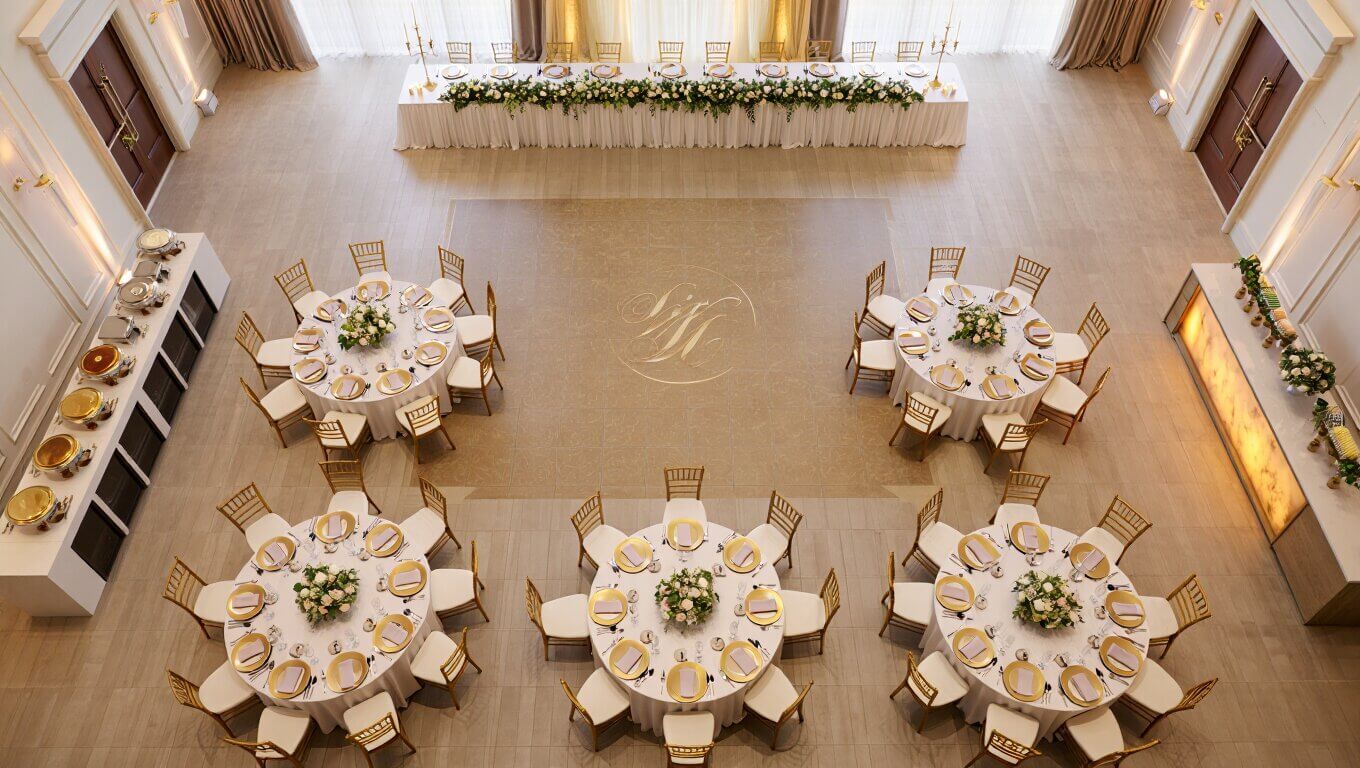
For a 50-guest wedding, most setups start with 5 tables using 6-foot round tables seating 10 guests each, but the final number often changes based on your venue and spacing. Since larger tables take up more room, many couples adjust to 6 to 7 tables for a more comfortable layout. You can also use 5-foot round tables or rectangular tables depending on your space and layout style. Always consider room for movement and other elements like the dance floor, bar, and buffet when deciding your final table count.
If you’re planning a wedding for 50 guests, one of the first questions that comes up is simple.
How many tables do we actually need?
The straightforward answer is this: 5 round tables (72-inch / 6-foot) with 10 guests per table.
It’s the cleanest and most balanced setup. It fits everyone evenly, keeps the layout simple, and gives each table enough room for dining and conversation, the main reason so many receptions seat guests in the round.
A 72-inch table is the same as 6 feet across, which is why it comfortably seats 10 guests with full place settings and centerpieces.
That said, table size matters more than it seems at first glance.
While 6-foot round tables work well for seating, they also take up a noticeable amount of space once chairs are added around them. In smaller or more compact venues, several of these tables can start to feel tight.
Walkways shrink. Chairs sit closer together. The room fills up faster than expected.
So even though 5 tables is technically correct, it doesn’t always mean it’s the best fit for your space.
That 6-foot table concern is really about what surrounds the table.
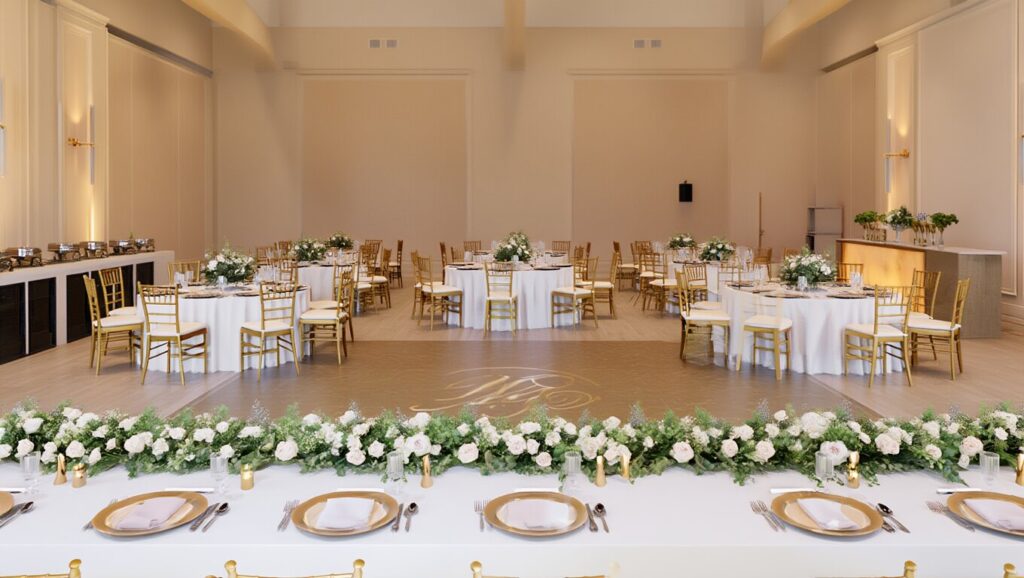
Even if the guest count fits perfectly, you still need space for movement, service, and the rest of your setup. Tables are only one part of the room, which is why it helps to draw the whole room, not just the tables.
You also need to account for:
Each of these takes up space and affects how people move through the event.
As a general guideline, tables usually need about 4.5 to 5 feet of space between them so guests can pull out chairs and move comfortably . Once you factor that in, along with everything else in the room, the layout can feel very different from what the table count suggests on paper.
This is why table count and layout should always be planned together. A well-designed space isn’t just about fitting tables. It’s about creating flow.
If your venue is tighter or you prefer a more relaxed feel, switching to smaller tables is a common adjustment.
Instead of 5 larger tables, you might use 6 to 7 round tables (60-inch / 5-foot) with about 8 guests per table.
A 60-inch table is 5 feet across, which naturally creates smaller groupings and gives each guest more personal space. It also makes spacing between tables easier to manage, especially in layouts where every foot matters.
Rectangular tables are another strong option, especially for longer or narrower venues, so it’s worth comparing the rectangular sizes before you commit.
For 50 guests, you’ll typically need 6 to 7 rectangular tables (8-foot) with about 8 guests each, or 7 to 9 rectangular tables (6-foot) with about 6 to 7 guests each.
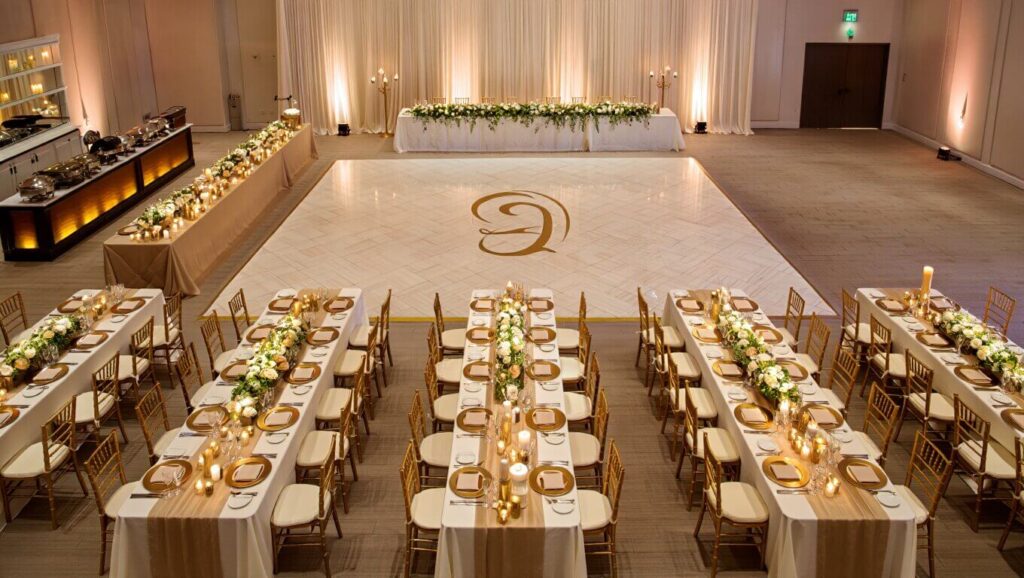
Eight-foot tables reduce the total number of tables and work well in structured layouts. Six-foot tables offer more flexibility and are easier to position around walls, corners, or tighter spaces.
Both options work. The right choice depends on your venue and the kind of layout you’re building.
Not every wedding needs to follow one table style.
A mixed layout can feel more natural, especially for a 50-guest event. For example, you might combine a few long tables with round tables, then add cocktail tables around the room.
This creates movement in the space and supports how guests actually experience the event. They sit, stand, mingle, and move between different areas throughout the night.
Cocktail tables aren’t a replacement for dinner tables, but they make a big difference in how the room functions, which is worth weighing when you add a few high-tops to the plan.
For a 50-guest wedding, adding 4 to 6 cocktail tables usually provides enough space for mingling during cocktail hour and throughout the reception.
They give guests a place to set drinks and connect more casually. If the event is more standing or cocktail-style, that number increases to about 10 to 13 tables to support that flow comfortably.
Table capacities are often listed as a range, but in real events, it’s best to plan toward the more comfortable end.
A 72-inch (6-foot) round table works best at 10 guests. A 60-inch (5-foot) round table works best at 8. A 6-foot rectangular table is typically most comfortable with 6 to 7 guests.
That extra space matters once you add plates, glassware, décor, and personal comfort.
Here’s a simple way to look at it:
Each option works. The right choice depends on your space and how you want your event to feel.
Planning your table layout isn’t just about fitting guests into seats.
It’s about creating a space that feels comfortable, open, and easy to move through.
Once you consider tables, spacing, and layout together, the right setup becomes much clearer.
Once you’ve settled on your tables, use our equipment-rental guide for a 50 guest wedding to plan the chairs, linens, tableware, and other pieces you’ll need.