
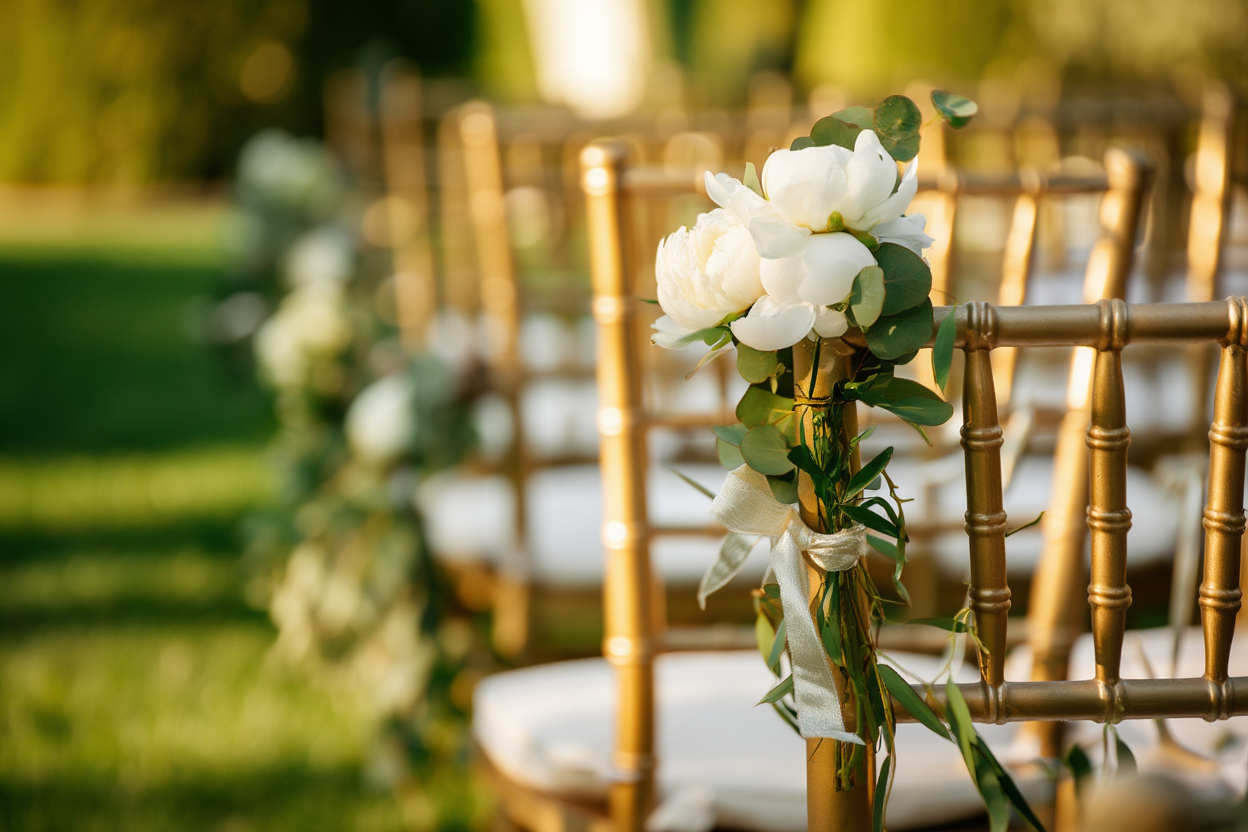
Chairs absolutely matter at a wedding because they shape how your ceremony looks, how your reception feels, and how comfortable your guests are. Wedding planners and designers consistently treat chairs as part of the visual design, not just seating. The right choice can elevate the entire space, while the wrong one can quietly bring everything down.
Why this question even comes up
Chairs are easy to overlook.
You’re thinking about florals, dresses, food, maybe lighting. Chairs feel like a background detail. Something the venue “just has.”
Then you see your photos later… and suddenly they’re everywhere.
Behind your ceremony. Around your tables. In your first dance shots.
And that’s when people realize chairs aren’t just furniture. They’re part of the entire experience.
Chairs quietly shape your wedding design
If you strip everything back, chairs are one of the largest repeated visual elements in a wedding.
Rows of them during the ceremony. Dozens around reception tables. Often hundreds in total.
That repetition matters.
If the style doesn’t match your vision, it shows up in subtle ways:
- A clean, elegant setup feels slightly off
- A rustic wedding feels less warm than expected
- A modern space feels cluttered instead of minimal
This is why many couples upgrade from standard venue chairs when they don’t align with the overall look , usually by swapping in a chair that matches the rest of the room.
It’s not about being fancy. It’s about consistency.
Guest comfort changes everything
There’s a difference between “a place to sit” and a chair people actually want to sit in.
And guests notice.
If chairs are:
- Too hard
- Too low
- Backless
- Wobbly on grass
- Or packed too tightly
People start shifting. Standing. Moving around.
It creates small distractions that ripple through the event.
There’s also a real human side to this. Not everyone experiences seating the same way.
Guests who are:
- Older
- Pregnant
- Wearing formal outfits
- Dealing with mobility issues
…need proper support. Chairs with backs, stable footing, and enough space.
Comfort isn’t a luxury. It directly affects how long people stay engaged and how they experience your day.
Ceremony chairs vs reception chairs (they are not the same problem)
A lot of people treat chairs as one decision.
They’re not.
Ceremony seating is about clarity and flow
You want:
- Clear sightlines
- Easy access to rows
- A clean aisle for the processional
Even small mistakes here stand out. Blocked views, awkward spacing, or unclear reserved seating can create unnecessary confusion, which is easier to catch when you check sightlines on a layout first.
Simple improvements make a big difference:
- Reserve seats with names, not just “Reserved” signs
- Ensure no one is stuck behind decor
- Balance both sides if you’re doing traditional seating
These are small decisions that prevent awkward moments later.
Reception seating is about endurance
This is where people sit for hours.
Eating, talking, listening to speeches, taking breaks.
Comfort becomes the priority.
For seated dinners especially, chairs need to:
- Support posture
- Match table height
- Allow easy movement in and out
If your reception is more cocktail-style, you can mix it up with:
- Fewer chairs
- Lounge seating
- Stools or soft seating
But even then, you still need enough proper seating for guests who need it.
Small upgrades that make a big difference
You don’t always need to upgrade the chair itself.
Sometimes it’s the add-ons that change everything:
- Seat cushions for comfort
- Chair covers for consistency
- A small lounge area for breaks
Even budget chairs can feel elevated with the right touches.
And sometimes, that’s the smarter move.
Accessibility is where chairs matter the most
This is the part people don’t always think about.
But it’s where chairs matter most.
A well-planned seating layout considers:
- Wheelchair spaces built into the design
- Chairs with and without armrests
- Clear aisle space for movement
- Seating options along pathways
Accessibility guidelines recommend things like:
- Clear floor space for mobility devices
- A mix of seating types
- Easy-to-read signage
This isn’t just about compliance.
It’s about making sure every guest feels considered.
Final thought
Chairs are one of those decisions that feel small in the moment.
But they touch almost every part of your wedding:
- What your photos look like
- How your guests feel
- How your event flows
- How inclusive your setup is
They don’t need to be expensive.
They just need to be intentional.
And when they are, everything else around them feels more put together.