
Quick Answer
The most popular event décor trends in 2026 focus on clean, intentional design rather than filling spaces with decorations. Events are using neutral color palettes, layered textures, and strategic lighting to create atmosphere.
The most common trends include:
- Neutral color palettes with soft whites and natural tones
- Textured materials like linen, satin, and sheer fabrics
- One statement focal point such as a backdrop or installation
- Lighting that transforms the mood of the space
- Lounge seating and flexible layouts that encourage interaction
These trends are appearing across weddings, corporate events, galas, fundraisers, and private celebrations because they create elegant spaces while keeping décor practical and budget-friendly.
Most people don’t plan events every day.
Maybe you’re planning a wedding. Maybe your company asked you to organize an annual event. Maybe you’re hosting a milestone birthday or a community fundraiser. Whatever the situation, the moment you start researching ideas, it can feel overwhelming.
There are endless decor options. Table styles, lighting setups, floral arrangements, color palettes, seating layouts, installations, and backdrops. Every inspiration photo looks different, and it’s hard to know which ideas actually work together.
The good news is that event design follows patterns. Every year, certain approaches rise to the surface because they simply work better for modern spaces, budgets, and guest expectations.
In 2026, the biggest shift is toward thoughtful simplicity paired with intentional impact. Instead of filling rooms with decorations, planners are creating clean foundations and adding one or two memorable features that shape the entire atmosphere.
Understanding these trends doesn’t mean you have to follow them exactly. But they can make planning much easier. Whether you’re organizing a wedding, a corporate conference, a gala, or a personal celebration, knowing what designers and planners are leaning toward right now can help you turn inspiration into a space that actually works.
What’s Changing in Event Décor in 2026
The biggest change in event design is not a specific color or material. It’s the way events are being approached.
Planners today are balancing higher expectations with tighter budgets. Industry outlook reports rising costs across venues, food and beverage, labor, and production, while clients and stakeholders still expect memorable guest experiences.
Because of this pressure, decor decisions have become more strategic. Instead of adding more decorative elements, designers are focusing on atmosphere, flow, and guest comfort. Spaces are being designed so people can move naturally, interact more easily, and feel immersed without being overwhelmed.
This shift is why many events now start with a calm visual foundation and then build toward one or two memorable focal moments.
The Color Direction for Events in 2026
Every year, color forecasts influence event design. While you never need to follow them strictly, they often signal broader shifts in taste.
For 2026, designers are leaning toward soft neutrals paired with grounded accent colors. A soft white neutral often referred to as Cloud Dancer is appearing across interior design and event styling. It reflects a growing preference for calmer spaces that reduce visual noise and create a sense of clarity.
At the same time, a deep blue-green tone known as Transformative Teal is gaining attention as a modern accent color. It balances freshness with stability, which makes it work particularly well for corporate events, healthcare gatherings, nonprofit fundraisers, and community events.
In practical terms, many events are now using neutral palettes as the base of the room. Soft whites, warm ivory tones, light greys, and natural textures create a calm environment that allows lighting, florals, and focal decor pieces to stand out.
Accent colors are then introduced sparingly through napkins, lighting washes, signage, floral elements, or stage backdrops. The result feels modern and intentional rather than busy.
Texture Is Becoming More Important Than Color
One of the most noticeable decor shifts in 2026 is the growing importance of texture.
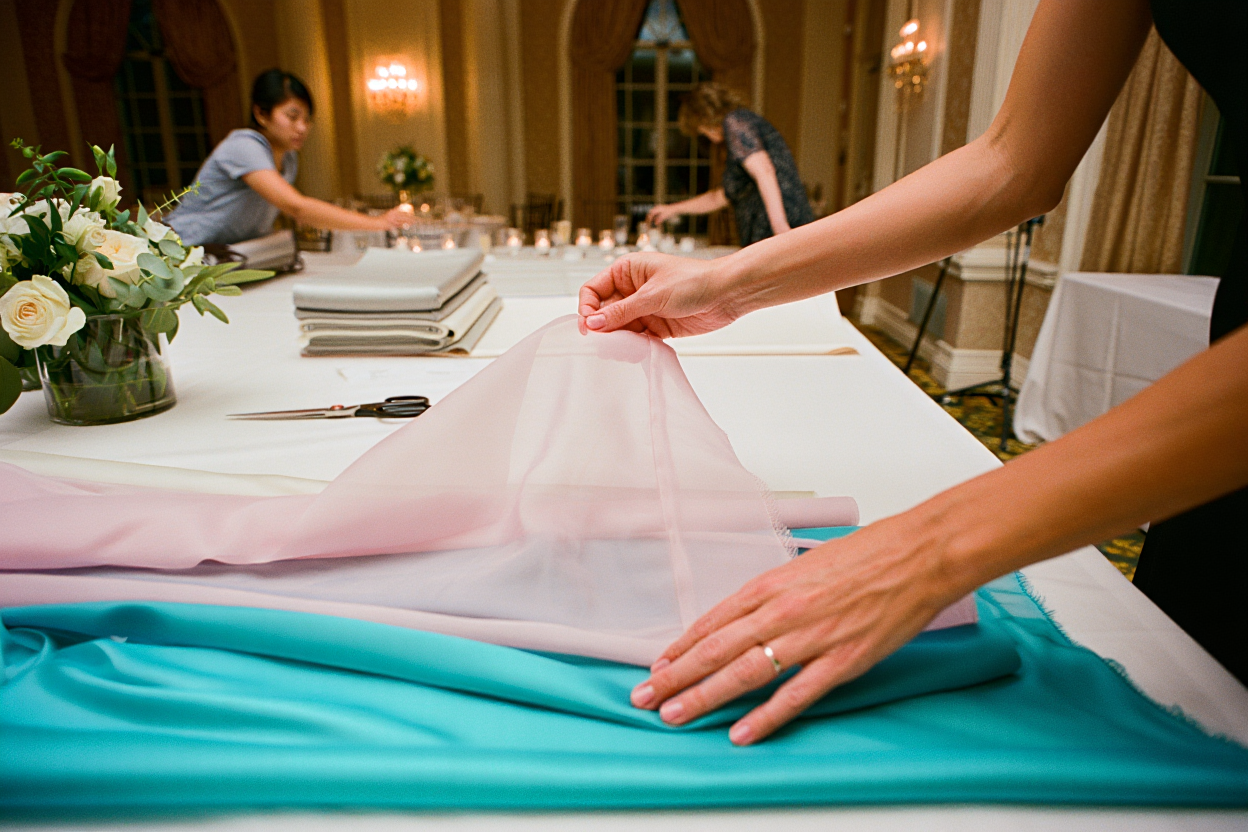
Instead of relying on bold color palettes to create impact, designers are layering materials that add depth and movement. Linen tablecloths, satin accents, sheer fabrics, fringe details, and textured ceramics are appearing across many types of events.
Interior design forecasts are highlighting washed linen as a defining texture direction.
Texture works especially well for events because it creates visual richness without increasing clutter. A layered drape backdrop can feel dynamic even with neutral colors. Ribbed glassware catches light in subtle ways that elevate table settings. Soft fabrics and textiles make spaces feel more comfortable and inviting.
For weddings, this often translates into layered linens and softer table designs. For corporate events, it means using materials that feel polished without being overly decorative.
Lighting Is Now One of the Most Important Design Tools
Lighting has become one of the most powerful tools in event design. Rather than treating lighting as a technical detail, planners are using it to shape the entire mood of a space.
Lighting can dramatically change how a room feels throughout the evening. Warm lighting creates intimacy during dinner. Cooler lighting helps guests focus during presentations. Dynamic lighting shifts bring energy to the dance floor.
For planners working with limited budgets, lighting is often one of the most cost-effective ways to transform a venue. A simple room can feel dramatically different with thoughtful uplighting and focused lighting on key areas.
Layout and Flow Are Shaping Guest Experience
Another major shift in event design is the way spaces are arranged.
Traditional banquet-style layouts are still common, but many planners are incorporating more flexible seating arrangements. Lounge clusters, cocktail tables, and small conversation zones allow guests to move more naturally throughout the space.
Event industry coverage from BizBash discusses this trend toward intentional guest engagement.
When layouts encourage movement, guests tend to stay longer and interact more. Networking becomes easier at corporate events. Guests mingle more naturally at weddings and parties. Even fundraisers often see better engagement when people can explore different areas rather than staying seated the entire evening.
Designing the flow of the room is often just as important as choosing the decor itself.
A Smart Approach to Event Decor Budgets
Decor budgets vary widely depending on guest count, venue requirements, and event complexity. However, one strategy is becoming increasingly popular across many types of events.
Start with a rental-based foundation, then invest in one standout feature.
Rental items such as table linens, chairs, lounge furniture, and draping create the base of the room. These elements establish the overall look and feel without requiring custom builds.
From there, one focal element becomes the highlight of the event. That might be an entry installation, a dramatic stage backdrop, a floral feature above the dance floor, or a custom photo moment.
This approach allows planners to control costs while still creating a memorable experience.
Linen Pricing and Smart Material Choices
Linens are one of the most common decor elements in any event, but the price range can vary significantly depending on fabric and style.
Because premium linens can be three to five times more expensive, many planners use them strategically. Head tables, VIP areas, and focal tables often receive upgraded fabrics, while the rest of the room maintains a cohesive look using simpler materials.
This strategy maintains visual hierarchy while keeping budgets manageable.
Sustainability in Event Design
Sustainability has also become an important factor in event planning. Rather than focusing only on messaging, many planners are adopting practical systems that reduce waste.
Reusable linens, modular decor elements, energy-efficient lighting, and rental-based setups all contribute to more sustainable events.
For most planners, choosing rentals instead of single-use materials is one of the simplest ways to reduce environmental impact.
A Simple Way to Start Planning Decor
When planning decor, it helps to start with a simple framework.
First, decide the overall tone of the event. Some events aim for calm elegance, while others lean toward high-energy celebration.
Next, establish a neutral foundation using linens, lighting, and furniture. This creates a cohesive environment that allows other design elements to stand out.
From there, layer in texture and materials that add depth without overcrowding the room.
Finally, choose one focal element that will define the experience. This could be a ceremony backdrop, a dramatic entryway, a statement stage, or a photo installation.
Even practical details such as linen quantities become easier once the basics are clear. If you’re hosting 120 guests and each table seats eight people, you’ll need 15 tables and therefore 15 tablecloths. Starting with clear numbers prevents unnecessary spending and helps keep planning organized.
Final Thoughts
Event design in 2026 is less about impressing people with scale and more about creating environments that feel thoughtful and welcoming.
Clean foundations, layered textures, intentional lighting, and well-designed layouts are shaping events across weddings, corporate gatherings, fundraisers, and personal celebrations.
When decor supports comfort, connection, and atmosphere, guests don’t just notice the space. They experience it.
And that is what makes an event memorable.