
Quick Summary
Yes, you can have a 50 person wedding in a backyard, but the yard needs to work for more than just the guest count. Plan for guest flow, seating, bathrooms, parking, weather, noise, catering space, power, and local rules before booking vendors. A backyard wedding can feel personal and beautiful, but it should be planned like a small event space, not just a larger house party.
A 50 person backyard wedding sounds like the perfect middle ground. It’s small enough to feel personal, but still big enough to bring together the people who matter most. You can picture the ceremony on the lawn, dinner under soft lighting, guests laughing around the tables, and maybe a quiet moment at the end of the night when the yard finally settles down.
Then the practical questions start showing up.
Is the yard actually big enough once tables, chairs, a tent, a bar, and a dance floor are added? Will guests be comfortable using the house bathroom all night? Where will everyone park? What happens if it rains? And if you’re adding a tent, music, alcohol, or outside vendors, are there rules you need to check before the wedding day?
That’s where backyard weddings can surprise people. The guest count is only one part of the decision. A 50 person wedding can absolutely work in a backyard, but the space has to support the way the day will actually happen. Guests need room to arrive, sit, eat, move around, use the bathroom, and enjoy the evening without everything feeling squeezed together.
This guide walks through what to consider before saying yes to a backyard wedding for 50 guests, from layout and tents to parking, bathrooms, weather, noise, and permits.
First, Think About What the Backyard Needs to Do
Before looking at tent sizes or table layouts, think about how the wedding will actually move.
A backyard wedding usually needs more than one open patch of grass. It needs a ceremony area, a dining area, space for drinks, a path to the bathroom, room for catering, somewhere for gifts or dessert, and a place for guests to gather without blocking everything else.
That’s where some yards work beautifully and others become difficult. A flat rectangular lawn with easy side access gives you options. A yard with steep slopes, narrow gates, garden beds, low branches, uneven ground, or a large deck in the middle may have less usable space than it first appears.
The goal isn’t just to fit 50 people. It’s to make the backyard work like a small event space.
We’ve seen this come up often when people start planning backyard events. The yard looks roomy when it’s empty. Then the tent is marked out, tables go in, the bar needs a spot, and suddenly there’s no clear path from the ceremony to dinner. Or the catering area ends up too close to guest seating, so staff are trying to work through the same space where people are lining up for drinks.
A good backyard setup should feel natural. Guests should know where to enter, where to sit, where to get a drink, where to find the bathroom, and where to go after the ceremony. If the layout needs too much explaining, it probably needs to be simplified.
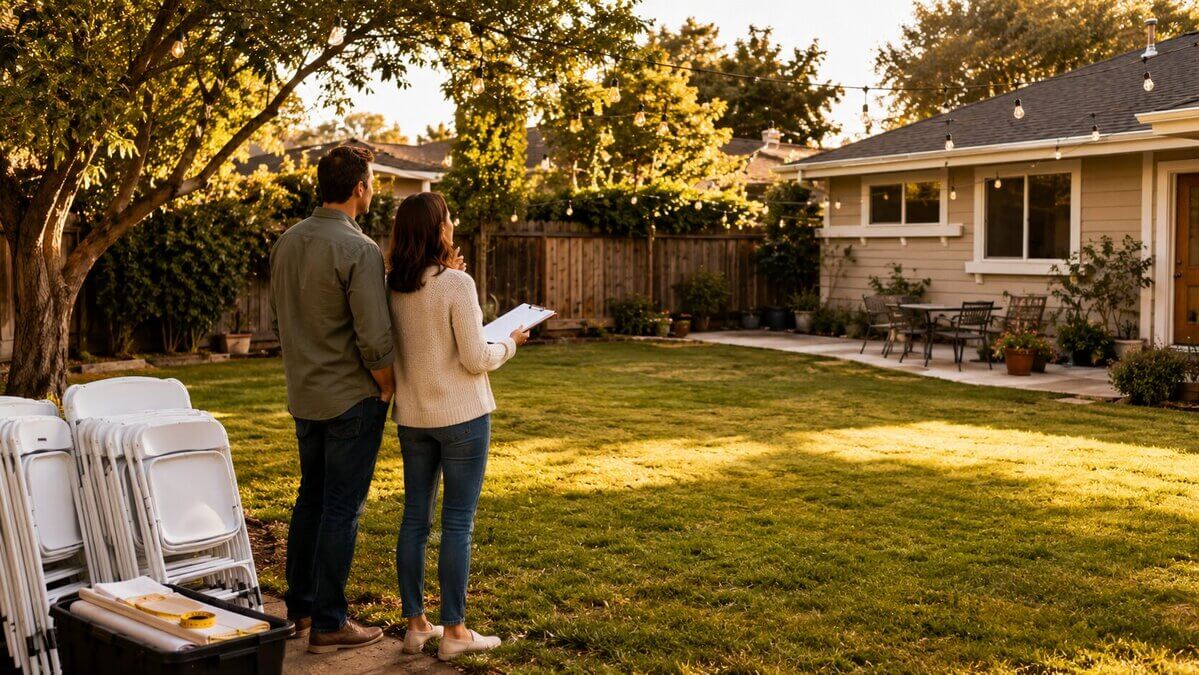
Don’t Guess the Space. Map It Out Early.
One of the first things couples wonder is whether 50 guests will actually fit in the backyard. That’s an important question, but it deserves its own planning step because it depends on more than the guest count.
Tables, chairs, walkways, a tent, a bar, a buffet, a dance floor, and catering space all change how much room you need. A yard can look spacious when it’s empty, then feel tight once everything is placed, which is why it helps to size the tent around all of it, not just the seating.
We have a separate guide that breaks this down in more detail: How Much Space Do You Need for 50 Guests Wedding? A Practical Planning Guide.
For this article, the main thing to know is simple: don’t plan around the lawn size alone. Plan around how guests will move, sit, eat, line up, use the bathroom, and gather throughout the day.
Ceremony and Reception in the Same Backyard
Hosting the ceremony and reception in one backyard can work well, but the transition needs a plan.
If the ceremony chairs are on the same lawn where dinner will happen, someone has to move those chairs after the ceremony. Tables may need to be shifted. Decor may need to be reset. Guests need somewhere to go while that happens.
That can be done, but it should not be improvised on the wedding day.
The smoothest backyard weddings usually keep the ceremony and reception areas separate when space allows. The ceremony might face a garden, tree, fence line, arch, or simple backdrop. The dining area can already be set under the tent or in another part of the yard. After the ceremony, guests naturally move into cocktail hour or dinner without waiting for the whole space to be rebuilt.
If the yard is smaller, a room flip can still work. Just make it realistic. Assign people ahead of time, know where the chairs are going, and allow enough time in the schedule. A backyard wedding feels relaxed when the behind-the-scenes work is already thought through.
Think About the Tent Early, But Don’t Treat It as Just a Size Question
For most backyard weddings, a tent is worth thinking about early.
Not because every wedding needs one, but because the tent affects the whole layout. It changes where dinner can go, how guests move, where lighting is installed, and what happens if the weather turns. It also needs enough space around it for proper setup, anchoring, sidewalls, entrances, and safe access, so it’s worth looking at the structures that suit a yard early.
A common mistake is only thinking about the tent top. In a real backyard, fences, trees, decks, landscaping, slopes, and narrow side yards can all affect where a tent can actually be installed.
If you’re trying to figure out the right tent size for 50 guests, we have a separate guide for that here: What Size Tent for 50 Guests Wedding? A Realistic Guide for Comfortable Wedding Tent Planning.
For this article, the key point is this: don’t leave the tent decision until the end. Even if the guest count is only 50, the tent can influence your seating, catering, dance floor, weather plan, and overall backyard flow.
Bathrooms Are a Bigger Deal Than People Expect
For 50 guests, some homes can manage with the existing bathrooms. Others really shouldn’t.
The difference comes down to the event length, alcohol, house layout, number of accessible bathrooms, and how comfortable you want guests to feel. A short afternoon ceremony with light refreshments is very different from a six-hour reception with dinner, drinks, and dancing.
Think about the actual guest experience.
Will guests need to walk through the kitchen all night? Go upstairs? Use a bathroom near bedrooms? Line up in a hallway? Will older guests or guests with mobility needs be able to access it easily?
For a formal wedding, one home bathroom can feel tight very quickly. It also puts a lot of traffic through the house, which not every host wants.
An upgraded portable washroom or restroom trailer can make a backyard wedding feel more comfortable and organized. It keeps the flow outside, protects the home, and gives guests a clear place to go. If portable washrooms are used, consider accessibility too. A bathroom solution only works if guests can actually reach it safely.
Parking Can Become the First Neighbour Problem
Fifty guests does not mean fifty vehicles, but it can still mean a crowded street.
Even 20 or 25 cars can create problems in a residential area. Guests may park too close to driveways, block sightlines, crowd a narrow road, or accidentally take every available spot in front of nearby homes.
Parking is often the first thing neighbours notice because it affects them before the music even starts.
A simple parking plan helps. Encourage carpooling. Keep the driveway open for elderly guests, vendors, or immediate family. If there’s a nearby lot, school, community centre, or wide street that can be used legally, provide clear instructions. For some weddings, a rideshare or shuttle plan is cleaner than trying to fit everyone near the house.
This is not the most exciting part of wedding planning, but it can prevent stress on the day. Guests should know where to go before they arrive.
Be Thoughtful About Noise
Music is part of the celebration. The issue is usually not music itself. It’s volume, bass, direction, and timing.
Outdoor sound travels differently than indoor sound. Bass carries. Voices carry. A DJ speaker pointed toward a neighbour’s bedroom window will feel much louder to them than it does to guests standing near the dance floor.
The best approach is simple: face speakers inward, keep bass controlled, lower the volume later in the evening, and know your local quiet hours. If you want dancing late into the night, you may need to move it indoors or choose a setup that controls sound better.
It’s also worth giving nearby neighbours a heads-up. Let them know the date, approximate guest count, music end time, and a phone number they can contact if there’s a concern. Most people respond better when they aren’t surprised.
A backyard wedding should feel joyful. It should not feel like the whole street got invited without being asked.
Check Permits and Local Rules Early
Private backyard weddings are often simpler than public events, but that does not automatically mean there are no rules.
Requirements vary by location. Your city, county, municipality, province, state, HOA, strata, or lease may all affect what’s allowed. The biggest things that can trigger rules are usually tents, temporary structures, amplified music, alcohol, food service, parking, and repeated use of a property for events.
A small invite-only wedding at a private home may be treated casually in one area and require review in another. Some places focus on tent size. Others care more about alcohol service, noise, parking, or temporary electrical work.
Before booking everything, check the basics:
- Is a permit required for the tent setup you want?
- Are there rules for amplified music or quiet hours?
- Are there alcohol rules for private events?
- Does your caterer need to meet local health requirements?
- Are there HOA, strata, lease, or neighbourhood restrictions?
- Will parking affect driveways, hydrants, alleys, or emergency access?
This does not need to be scary. It just needs to be done early. A few calls or emails before deposits are paid can save a lot of frustration later.
Catering Needs More Space Than Just a Table
Catering is one of the easiest things to underestimate in a backyard.
A buffet table is not the whole catering plan. Caterers may need prep tables, coolers, hot boxes, garbage access, water, power, lighting, and a clean path from prep to service. If they are plating meals, they need even more working space, which is where the coolers, prep tables and serving equipment come in.
The same goes for the bar. Guests gather around drinks. If the bar is placed in a tight corner or right beside the buffet, you can end up with traffic jams all night.
Ask the caterer what they need before finalizing the layout. A professional caterer will usually tell you how much prep space they need, where they prefer to be placed, and what power or water access is required.
This is where a backyard starts to act like a small venue. Guest-facing areas need to look nice, but service areas need to function. Both matter.
Weather Planning Is Not Just About Rain
Rain is the weather issue most couples think about first, but it’s not the only one.
Wind can affect tents, sidewalls, arches, candles, signage, linens, and floral arrangements. Heat can make guests uncomfortable, especially older family members. Cold weather can shorten the evening if there are no heaters. Soft ground can make chair legs sink or delivery access harder. Smoke, humidity, or sudden temperature drops can also change the feel of the event.
A tent helps, but it doesn’t solve everything.
Sidewalls may block rain and wind, but they can make a tent feel warmer. Heaters need safe placement and enough fuel. Fans need power. Flooring may be needed if the ground is uneven or damp. A dance floor on grass may look simple, but it still needs a stable surface underneath.
A good weather plan answers a few direct questions:
- Where does the ceremony happen if it rains?
- What decor needs to be removed if it gets windy?
- Where can guests cool down or warm up?
- What happens if the ground is too soft?
- Who makes the weather call, and when?
It’s much easier to enjoy the day when those decisions are not being made in a panic.
Power and Lighting Should Be Planned Together
Backyards are not built like event venues.
A couple of outdoor outlets may be fine for string lights, but not for a full wedding setup. DJ equipment, catering appliances, coffee service, heaters, fans, lighting, and restroom trailers may all need power. Too many extension cords can also create tripping hazards if they run across walkways, which usually means planning temporary power properly.
Before the wedding, list everything that needs electricity. Then confirm where the power will come from. Some events may need a generator or temporary power plan, especially if the setup is spread across the yard.
Lighting is just as important. Once the sun goes down, guests need to see where they’re walking. Pathways, stairs, bathroom routes, food areas, and parking areas should not be left in the dark.
The right lighting also changes the feeling of the space. Warm lights under a tent, soft table lighting, and a lit pathway can make a backyard feel intimate and finished. It’s one of the easiest ways to make the event feel intentional.
Accessibility Is Part of Good Hosting
Even if a backyard wedding is private, accessibility should still be part of the plan.
Think about grandparents, guests with walkers, people wearing heels, parents carrying babies, or anyone who may struggle with uneven ground. A beautiful setup loses some of its charm if guests feel uncomfortable moving through it.
Try to create one firm, clear route from arrival to the ceremony, dining area, and bathroom. Watch for steps, gravel, steep slopes, soft grass, narrow gates, and uneven pavers, and a run of flooring or carpet can fix the worst of it.
Seating matters too. If a guest uses a wheelchair or mobility device, don’t place them off to the side as an afterthought. Build the layout so they can sit with everyone else and enjoy the same view, the same conversations, and the same experience.
That kind of planning is not just practical. It’s thoughtful.
Backyard Weddings Are Not Always Cheaper
A backyard wedding can save on venue rental fees, but it can add costs in places couples don’t always expect.
A traditional venue may already include bathrooms, parking, power, lighting, garbage access, kitchen space, staff areas, and weather protection. In a backyard, many of those pieces may need to be rented, built, or planned separately.
The biggest cost drivers are usually:
- Tent and weather protection
- Tables, chairs, linens, and place settings
- Lighting and power
- Bathrooms
- Catering and bar setup
- Flooring or dance floor
- Delivery, setup, takedown, and labour
- Cleanup and waste removal
That doesn’t mean a backyard wedding is a bad idea. It just means the budget needs to be honest, and instalments can help if you’d rather spread the rental cost across smaller payments.
The value of a backyard wedding is often emotional. It may be the family home, a place with memories, or a space that feels more personal than a venue. That can be worth it. Just don’t assume “backyard” automatically means “cheap.”
What a Good Backyard Layout Usually Includes
A good 50 person backyard wedding layout has clear zones. Guests should not be eating in the catering path, lining up for the bar in front of the bathroom, or walking through the ceremony area to find their seats.
A simple layout may include:
- Guest arrival or drop-off area
- Ceremony space
- Cocktail or mingling area
- Reception or dining area
- Bar or beverage station
- Catering prep area
- Bathroom route
- Waste and cleanup area
- Vendor access path
- Clear emergency access
You don’t need a professional site map for every backyard wedding, but even a basic sketch helps. Draw the house, yard, fence gates, driveway, trees, deck, tent, tables, and main walking paths, or draw it to scale so the distances are real.
Then imagine the busiest moments.
Guests arriving.
Everyone lining up for drinks.
Dinner being served.
Someone walking to the bathroom during speeches.
Vendors packing up at the end of the night.
If those moments work on paper, the event has a much better chance of working in real life.
So, Can You Have a 50 Person Wedding in a Backyard?
Yes, you can have a 50 person wedding in a backyard, as long as the space can support the full event and local rules allow it.
The best backyard weddings don’t feel crowded or improvised. They feel personal, comfortable, and well thought out. Guests have room to sit, eat, move, talk, and celebrate. Vendors have space to work. The bathroom, parking, weather, sound, and power plans are already handled. The couple gets to enjoy the day instead of managing small problems every hour.
That’s the real goal.
A backyard wedding is not just about fitting 50 people onto a lawn. It’s about creating a space where 50 people can gather comfortably and feel cared for.
Before you commit, walk through the yard with fresh eyes. Measure the usable space. Think through the guest flow. Ask about permits. Plan for bathrooms, parking, weather, power, and noise. Once those pieces make sense, the backyard can become something special.
Not just a place behind the house.
A real wedding space.