Quick Summary:
Tent size increases when you add: round tables, dance floors, buffets, bars, DJs, sidewalls, or extra spacing.
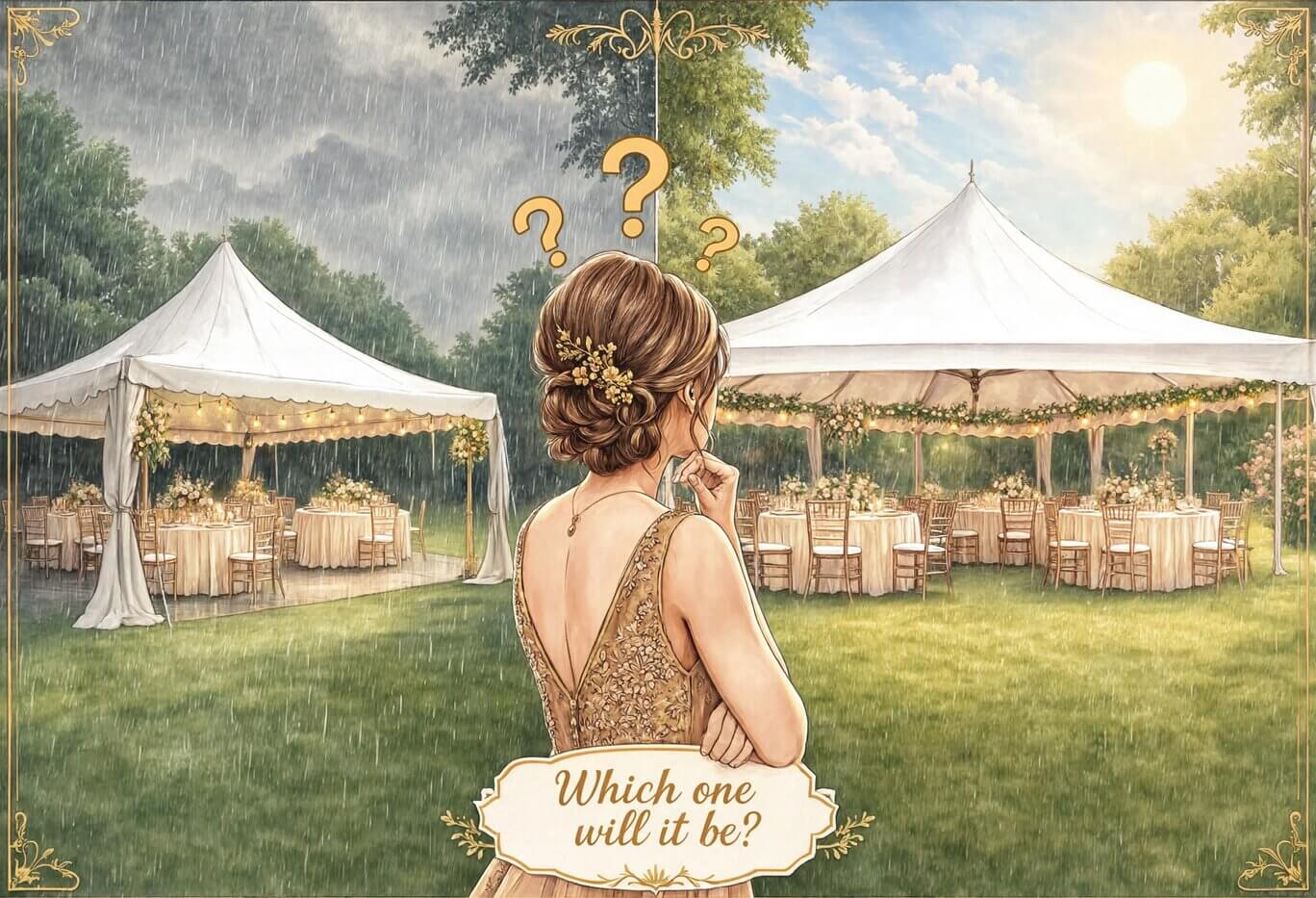
Planning an outdoor wedding sounds simple at first. Then the tent conversation starts.
Suddenly you’re comparing 20×40 tents, 40×40 tents, dance floor layouts, buffet tables, aisle spacing, and weather plans, trying to figure out how 50 guests somehow need more space than expected.
We see this happen all the time.
A couple tells us, “It’s only 50 people,” and assumes a smaller tent will work. But once you start adding the things that make a wedding actually feel complete, the space requirements change fast.
So if you’re wondering what size tent for 50 guests wedding setups usually require, the answer depends less on the guest count alone and more on how you want the wedding to function.
A simple seated dinner needs very different spacing than a reception with a dance floor, buffet stations, lounge seating, or a live band. Even table shape and weather protection can change the amount of room you’ll need.
That’s why tent sizing for weddings is rarely one-size-fits-all.
The biggest mistake people make is planning based only on guest count. Guest count matters, but layout matters just as much.
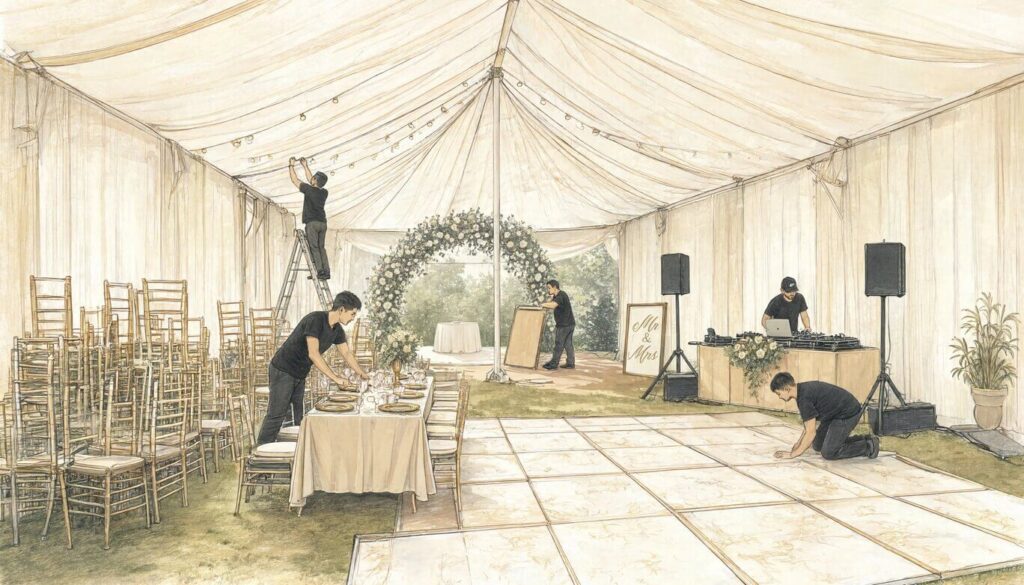
Not every 50-person wedding uses space the same way.
A cocktail-style reception where guests mostly stand and mingle needs far less room than a full seated dinner with round tables, a DJ, buffet tables, gift tables, and a dance floor.
That’s why you’ll sometimes see wildly different recommendations online.
One website may say a 20×30 tent works for 50 guests. Another recommends a 40×60. Both can technically be correct depending on what’s happening inside the tent.
Here’s what usually increases the required tent size:
Those additions take up real square footage very quickly.
For example, a standard dance floor alone can easily use 144 square feet or more. A buffet setup can take another 100 square feet. Add a bar and DJ area, and suddenly a “small wedding” needs considerably more room.
If you’re trying to stay budget-friendly or working with a tighter backyard space, a 20×40 tent is usually the smallest practical option.
That gives you 800 square feet to work with.
A 20×40 can work well for:
It works best when the layout is intentionally efficient.
That means rectangular banquet tables instead of large round tables, a smaller dance floor, and fewer “extra” areas inside the tent.
A 20×40 tent can start feeling crowded once you add multiple feature areas. Guests notice that quickly, especially during dinner service or dancing.
It’s functional. It’s just not always the most comfortable.
For most weddings, a 40×40 tent ends up being the sweet spot.
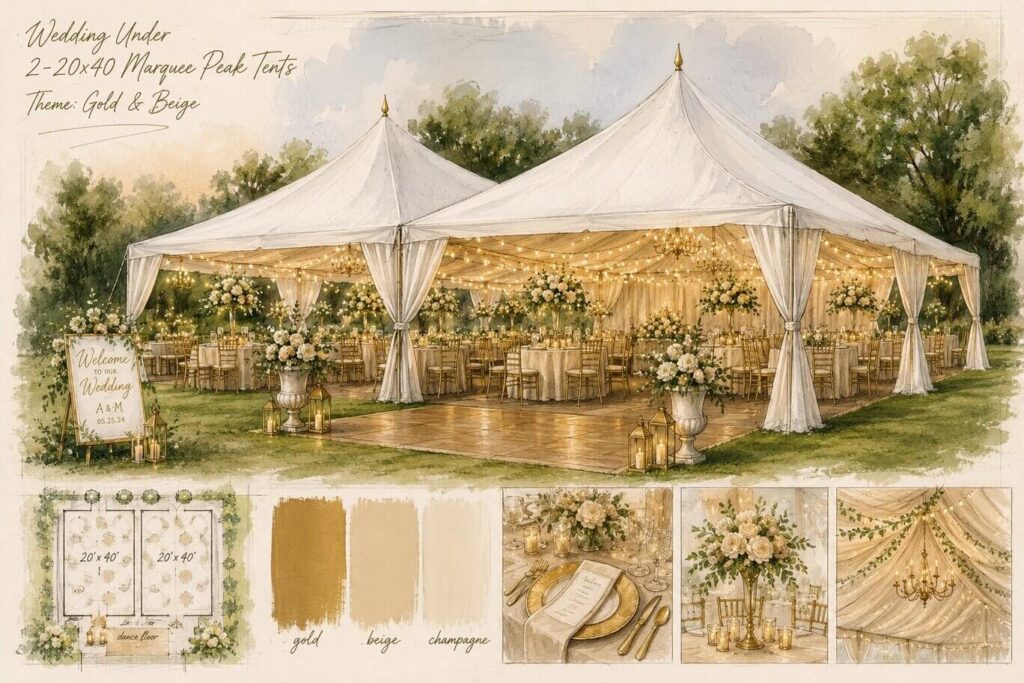
This is the size we most commonly recommend when couples want their wedding to feel relaxed instead of tightly packed.
A 40×40 tent gives you 1,600 square feet, which creates enough room for:
The extra width makes a surprisingly big difference.
A 20-foot-wide tent can feel narrow once chairs are pulled out and guests start moving around. A 40-foot-wide tent opens the layout considerably and gives vendors more flexibility during setup.
If you want a wedding that feels balanced and comfortable without going oversized, this is usually the safest recommendation.
Sometimes 50 guests still need a much larger tent.
That sounds backwards until you look at the layout.
A 40×60 tent often becomes the better choice when:
One thing couples underestimate is how much easier larger tents feel during the actual event.
Servers move better. Guests aren’t squeezing between chairs. The dance floor feels more inviting. People naturally spread out instead of clustering in tight spaces.
The wedding just flows better.
This one surprises a lot of people.
Round tables almost always require more tent space than rectangular banquet tables, so it’s worth weighing the round and rectangular options side by side.
They create a more classic wedding look and better conversation flow, but they consume more floor area per guest.
For a 50-person wedding:
If you’re trying to maximize space in a backyard or reduce rental costs, table shape alone can influence the tent size recommendation.
Tent sizing isn’t only about seating.
Weather planning changes things too, especially in Alberta where conditions can shift quickly.
Once couples add:
…the tent often needs to grow.
A tent that feels perfect on a sunny afternoon can feel crowded once sidewalls are installed and guests spend the entire evening underneath it, so it’s worth checking which structures take sidewalls before you choose.
That’s why we usually recommend planning slightly larger rather than trying to squeeze everything into the smallest possible footprint.
A backyard wedding introduces another layer of planning.
The tent itself may technically fit, but you also need room for:
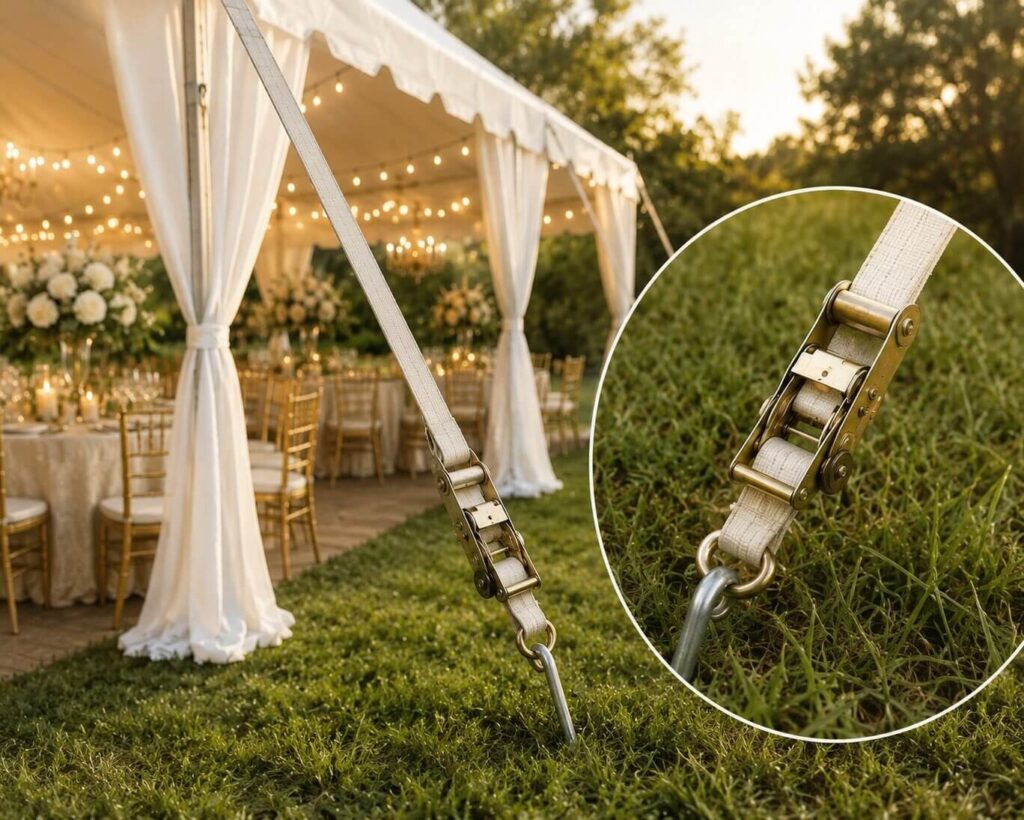
Trees, fences, decks, slopes, and overhead power lines can all affect which tent sizes are possible.
Careful measuring and layout planning become especially important in tighter backyard spaces, which is where matching a tent size to your yard starts to pay off.
If someone asked us for the simplest answer possible, here’s what we’d say:
Most couples are happier sizing slightly larger than trying to make a smaller tent work.
Nobody walks into a wedding and complains there’s too much room.
But guests absolutely notice when things feel cramped.
If you’re still unsure, the best thing you can do is build the layout first, then size the tent around it instead of guessing based only on guest count, which is exactly what you can do on a scaled plan before booking anything.
If you’re searching for “tent rentals near me” for your Edmonton wedding, start with your planned layout so you can compare options with a clearer idea of the space you’ll need.
At GPLANN Event Rentals, we help couples map out real layouts based on tables, dance floors, bars, staging, catering, and the actual flow of the event so the tent fits the wedding properly, not just the guest count.
Because a comfortable wedding isn’t about squeezing 50 people under a roof.
It’s about creating a space where everyone can actually enjoy being there.