
Quick Summary
For most 50-person events, the number of tablecloths you need depends on the table layout, service style, and additional setup tables, not just the guest count alone. A formal seated dinner typically needs 7 to 8 tablecloths, buffet-style events often need 9 to 11, and cocktail receptions may require anywhere from 5 to 13 cocktail covers depending on whether dinner seating is provided elsewhere. The article also explains how table sizes, linen drops, venue spacing, and common planning mistakes can significantly affect your final linen order.
Tablecloth planning sounds simple until the event layout starts changing.
A customer books for 50 guests and assumes they need five tablecloths. Then catering adds buffet tables. The venue switches from rounds to banquet tables. Someone wants a dessert station, a gift table, and a separate welcome table near the entrance.
Suddenly the linen count looks completely different.
At GPLANN Event Rentals, we see this happen often with weddings, backyard tent receptions, corporate dinners, and community events around Edmonton. The guest count usually stays fixed. What changes is how the room functions.
That’s why there isn’t one universal answer for how many tablecloths you need for 50 guests.
The real answer depends on:
- Table type
- Seating layout
- Service style
- Whether additional tables need linens
- The look you’re trying to achieve
Once those pieces are clear, the linen count becomes much easier to calculate.
Start With the Guest Table Layout
Before counting linens, figure out what tables are actually being used.
For 50 guests, most events usually fall into one of these layouts:
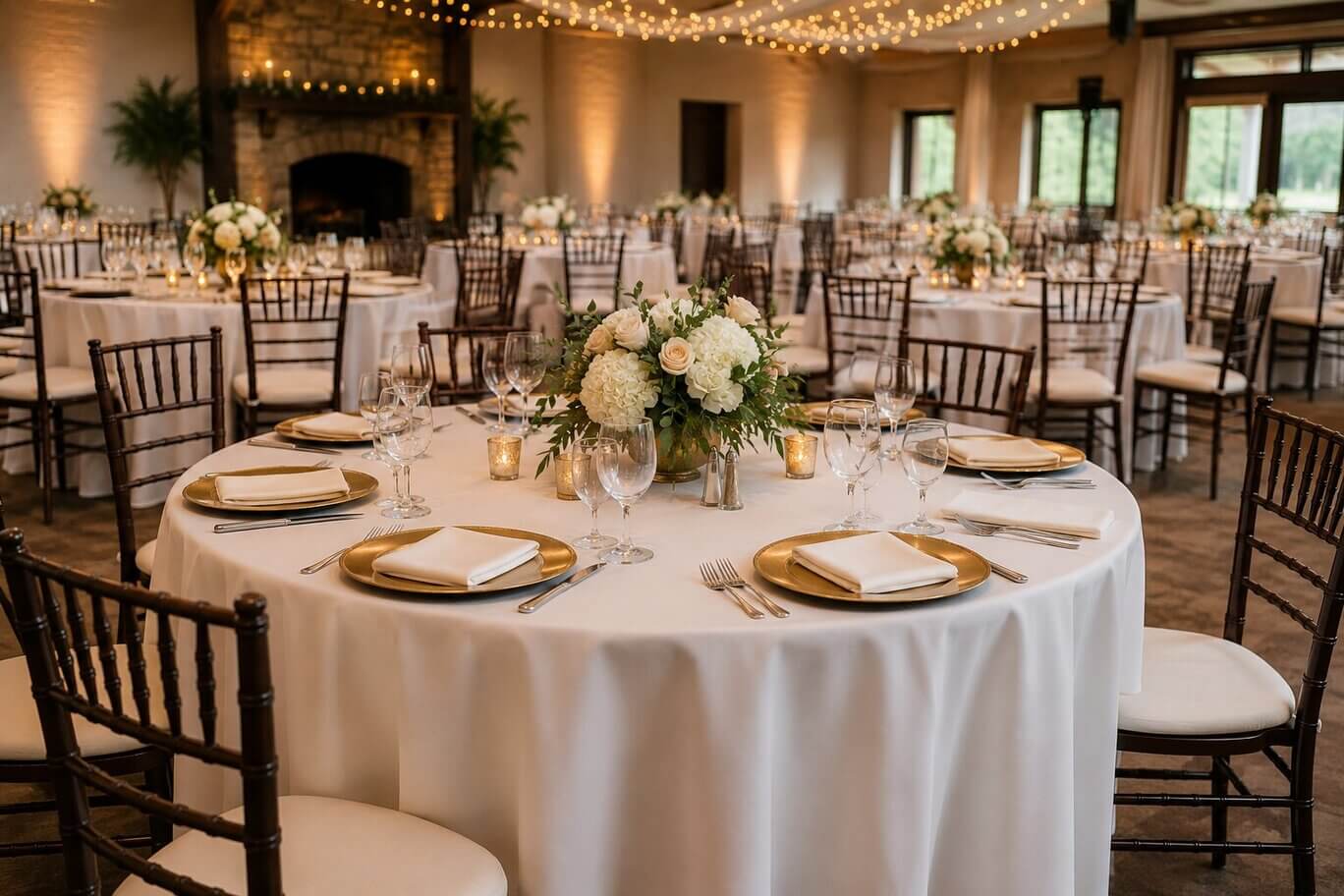
Round Tables
This is the most common setup for weddings and formal dinners.
Typical layouts are:
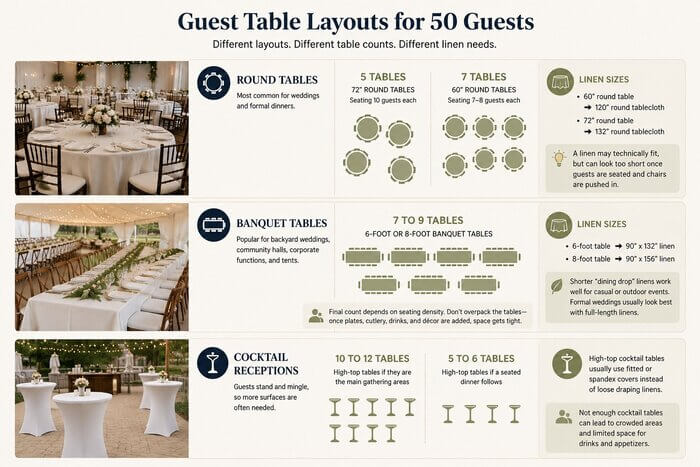
- 5 tables using 72-inch round tables seating 10 guests each
- 7 tables using 60-inch round tables seating 7 to 8 guests comfortably
The larger 72-inch rounds reduce the total number of tables, which also reduces the linen count. The tradeoff is needing more floor space between tables.
The 60-inch rounds create a slightly more spacious seating experience at each table, especially once centerpieces, chargers, wine glasses, and shared dishes are added.
For linens:
- 60-inch round tables commonly use 120-inch round tablecloths for floor-length coverage
- 72-inch round tables commonly use 132-inch round tablecloths
This is where people often underestimate sizing. A linen may technically fit the table, but still look too short once guests are seated and chairs are pushed in.
Banquet Tables Usually Increase the Linen Count
Rectangular banquet tables are popular for:
- Backyard weddings
- Community halls
- Acreage events
- Corporate functions
- Tent setups with tighter spacing
For 50 guests, banquet layouts often use:
- 7 to 9 tables
- Usually 6-foot or 8-foot banquet tables
The final count depends on how tightly guests are seated.
A common mistake is trying to maximize seats per table to reduce rental costs. On paper it works. In reality, once plates, cutlery, drinks, and décor are added, the table can feel crowded very quickly.
Family-style dinners especially need more room than people expect.
Typical linen sizes are:
- 90 x 132 linens for 6-foot banquet tables
- 90 x 156 linens for 8-foot banquet tables
For casual events, shorter “dining drop” linens are sometimes used instead of floor-length cloths. Outdoor events often prefer this because the linens stay cleaner and don’t drag on grass or gravel.
Formal weddings usually look better with full-length linens, especially under tent lighting at night.
Cocktail Receptions Are Calculated Differently
Cocktail-style events don’t follow the same table logic as seated dinners.
People often assume fewer chairs means fewer tables. Sometimes it’s the opposite.
If guests are standing and mingling, you usually need more surfaces spread throughout the room so people naturally gather in smaller groups instead of crowding one area.
For a 50-person cocktail reception:
- 10 to 12 cocktail tables is a comfortable starting point if high-top tables are the primary gathering areas
- 5 to 6 cocktail tables is usually enough if guests will move into a seated dinner afterward
This distinction matters a lot.
We’ve seen events where the cocktail hour felt crowded simply because there weren’t enough surfaces for guests to place drinks and appetizers comfortably.
For high-top cocktail tables, fitted or spandex covers are also common instead of loose draping linens.
The Linen Count Usually Goes Beyond Guest Tables
This is the part people forget most often.
Guest tables are only part of the setup.
Additional tables commonly needing linens include:
- Buffet tables
- Dessert tables
- Gift tables
- DJ tables
- Registration tables
- Bar stations
- Sweetheart tables
- AV tables
For a 50-person wedding or reception, it’s very normal for the final linen count to increase by 2 to 4 additional tablecloths once these are included.
A layout with 7 guest tables can easily become an order for 10 or 11 linens after the full setup is finalized.
That’s why counting guests alone rarely gives an accurate linen quantity.
Linen Length Affects More Than Just Appearance
One detail that changes both sizing and ordering is the linen drop.
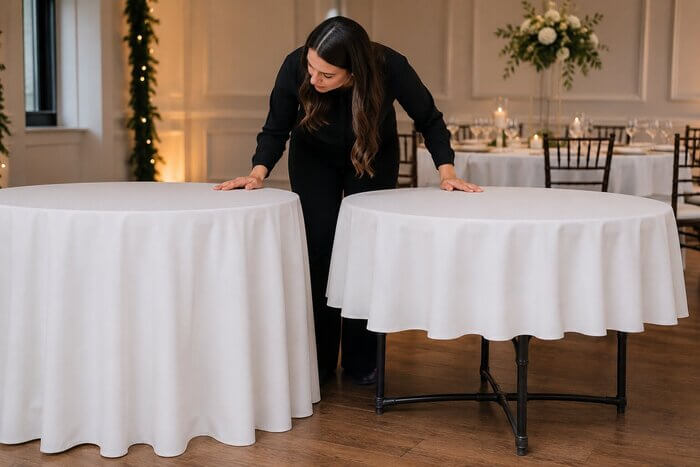
Floor-length linens require much larger cloth sizes than shorter casual drops. For example, a 60-inch round table might use a 90-inch linen for a shorter mid-drop look, but a 120-inch round linen for full floor-length coverage.
That difference matters because not every rental company stocks every size in every color or fabric.
We’ve seen situations where customers finalize their table count first, then realize later that the exact linen size they wanted has limited availability.
Outdoor events also tend to approach linen drops differently. Shorter drops are common for backyard setups, acreage weddings, and tent events where long linens can drag on grass, collect dirt, or shift in the wind.
Cocktail tables are another exception since many events use fitted or stretch covers instead of loose draping cloths.
This is why confirming the event style before ordering linens matters so much. Two 50-person events can end up needing completely different linen sizes even when the guest count stays the same.
Should You Order Extra Tablecloths?
In most cases, yes.
Not dozens. Just enough to protect yourself from problems during setup or service.
At GPLANN, we usually recommend having at least:
- One spare linen for each primary size being used
Especially for:
- Weddings
- Plated dinners
- Multi-hour receptions
- Events with alcohol service
Spills happen quickly during real events.
Coffee during setup. Wine during speeches. Kids pulling linens near cake tables. A backup linen can save a surprising amount of stress once guests arrive.
One Overlooked Detail: Room Spacing
The same 50 guests can feel completely different depending on the room layout.
A tight banquet hall might need fewer, longer tables to preserve walkways. A large tent setup may need more tables to keep the room feeling balanced and full.
Accessibility spacing matters too.
Once chairs are occupied, servers need room to move between tables comfortably. Guests also need enough clearance to pull chairs out without blocking walkways.
This is another reason linen planning should happen after the layout is finalized, not before.
So How Many Tablecloths Do You Actually Need for 50 Guests?
For most events, these are realistic planning ranges:
| Event Type | Typical Linen Count |
|---|---|
| Formal seated dinner | 7 to 8 tablecloths |
| Casual banquet setup | 7 to 9 tablecloths |
| Buffet-style event | 9 to 11 tablecloths |
| Cocktail reception with dinner later | 5 to 6 cocktail covers |
| Cocktail-only reception | 10 to 13 cocktail covers |
These ranges account for practical event planning, not just the minimum number of guest tables.
The final quantity still depends on:
- Actual table sizes
- Venue spacing
- Catering setup
- Additional service tables
- Linen drop preference
- Cocktail versus seated layout
That’s why two different 50-person events can end up with very different linen orders even though the guest count is identical.
Final Thoughts
The easiest way to plan tablecloth quantities is to stop thinking about guests first and start thinking about tables first.
Once the layout is finalized, the linen count becomes much more predictable.
In our experience, the smoothest setups happen when linens are planned alongside the actual event flow. Where guests sit. Where food is served. How people move through the room. Which tables become visual focal points.
That’s what turns a simple linen count into a setup that actually works well once the event begins.