
Quick Summary:
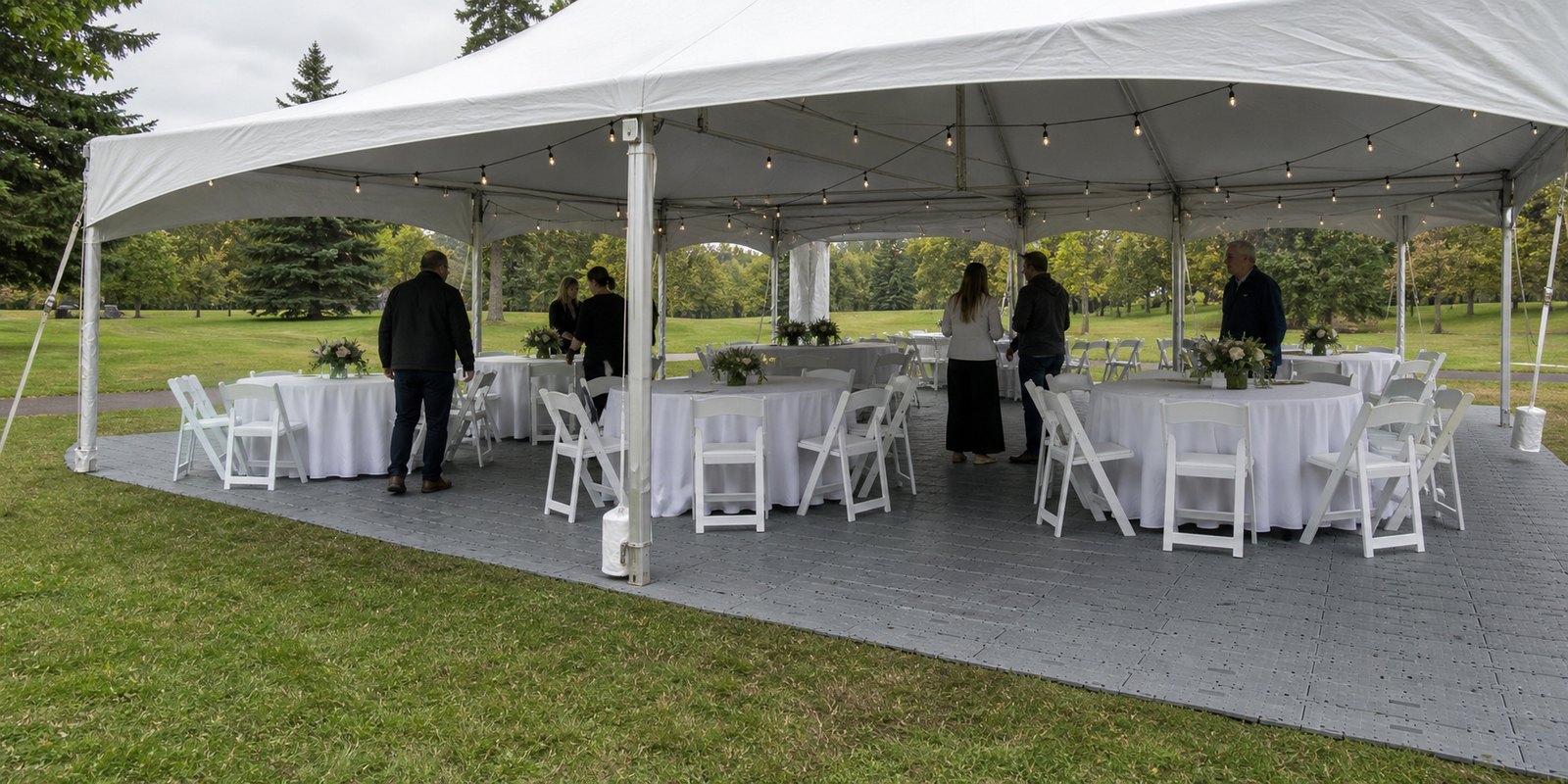
- Temporary flooring over grass is worth considering where guests or staff will move repeatedly, table and chair legs may sink, or mud could reach the event area.
- A temporary event subfloor creates a practical surface over grass, but it does not level uneven ground.
- A finished dance floor should not be installed directly on grass. GPLANN recommends a temporary subfloor underneath.
- Panels measure 12 × 24 inches, cover 2 square feet each, and follow a modular layout.
- The one-day rental rate is $1.25 per 2-square-foot panel, with no minimum order.
- Pickup is available. When GPLANN delivers, setup and takedown are included at no additional charge.
Outdoor events ask a lot from grass. A site may look dry and comfortable during planning, then feel very different once tents, furniture, staff and repeated foot traffic arrive. Rain can make the problem more noticeable, but even dry grass can create practical issues during setup and service.
That is why event flooring should be treated as an operational decision, not only a visual upgrade. The useful question is where the event will work better with a temporary surface and where grass alone is enough.
What a temporary event subfloor actually does
A temporary event subfloor is a modular surface installed over an event area. It separates people, furniture and working equipment from direct contact with the grass and soil. GPLANN recommends it where repeated movement, soft ground or mud could make an outdoor setup harder to use.
It can be used under tables and chairs, inside vendor tents, and beneath working areas for catering carts, bars or staging. It can also act as the support layer beneath a separate finished dance floor.
The most important limit is simple: the subfloor does not level uneven ground. A slope, dip or irregular section of lawn remains part of the site after the panels are installed. This flooring is not a replacement for grading or ground repair, so the proposed area still needs to make sense for the planned use.
When the extra layer is worth adding
Busy tent interiors
A tent may be installed on grass, but the space inside still has to function. When guests, servers or vendors will be moving through the same routes throughout the event, temporary flooring can create a more practical surface than grass alone. It also helps keep that movement separated from exposed soil when conditions become muddy.
If you are already planning tent rentals for a busy outdoor event, it is worth reviewing the working areas inside the tent instead of treating the entire footprint as one uniform space. A quiet seating corner may have different needs from a service aisle or vendor station.
Tables, chairs and guest areas
Tables and chairs can settle into soft grass during an event. That can make furniture feel less consistent and leave guests adjusting chair legs as the ground changes under them. A temporary event subfloor is often recommended where furniture will stay in place for long periods or where the lawn is already soft.
This does not mean every chair or table at every outdoor event requires flooring. It means the risk of sinking, mud and repeated movement should be considered before the layout is finalized.
Food vendors, bars and equipment
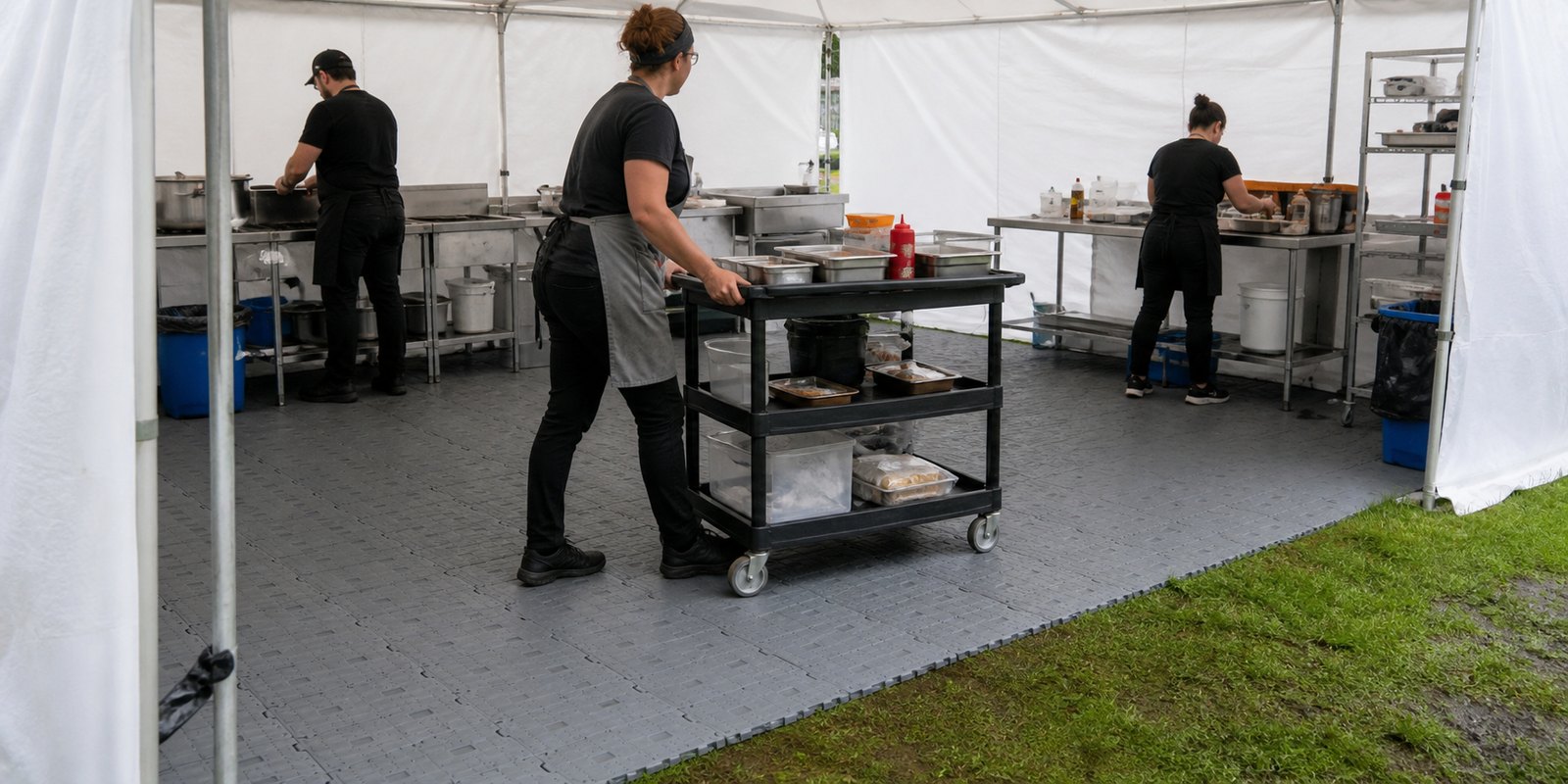
Vendor spaces work differently from casual guest areas. Food vendors may be moving between preparation, storage and service points for hours. Bars, catering carts and staging also create concentrated working zones where the surface matters throughout setup, service and takedown.
For these areas, the value of the subfloor is often less about appearance and more about helping the team move around while keeping the operation off the grass and mud.
What our Heritage Festival project showed
At GPLANN’s 2026 Edmonton Heritage Festival project, vendors needed to move within tents throughout the event. The temporary event subfloor was especially useful for food vendors because their working areas had to support frequent movement during service.
That project is a good example of why flooring decisions should follow how a space will actually be used. A vendor tent is not simply covered space. It is a temporary workplace, and its floor affects how practical that workplace feels during a busy event.
A finished dance floor on grass needs support underneath
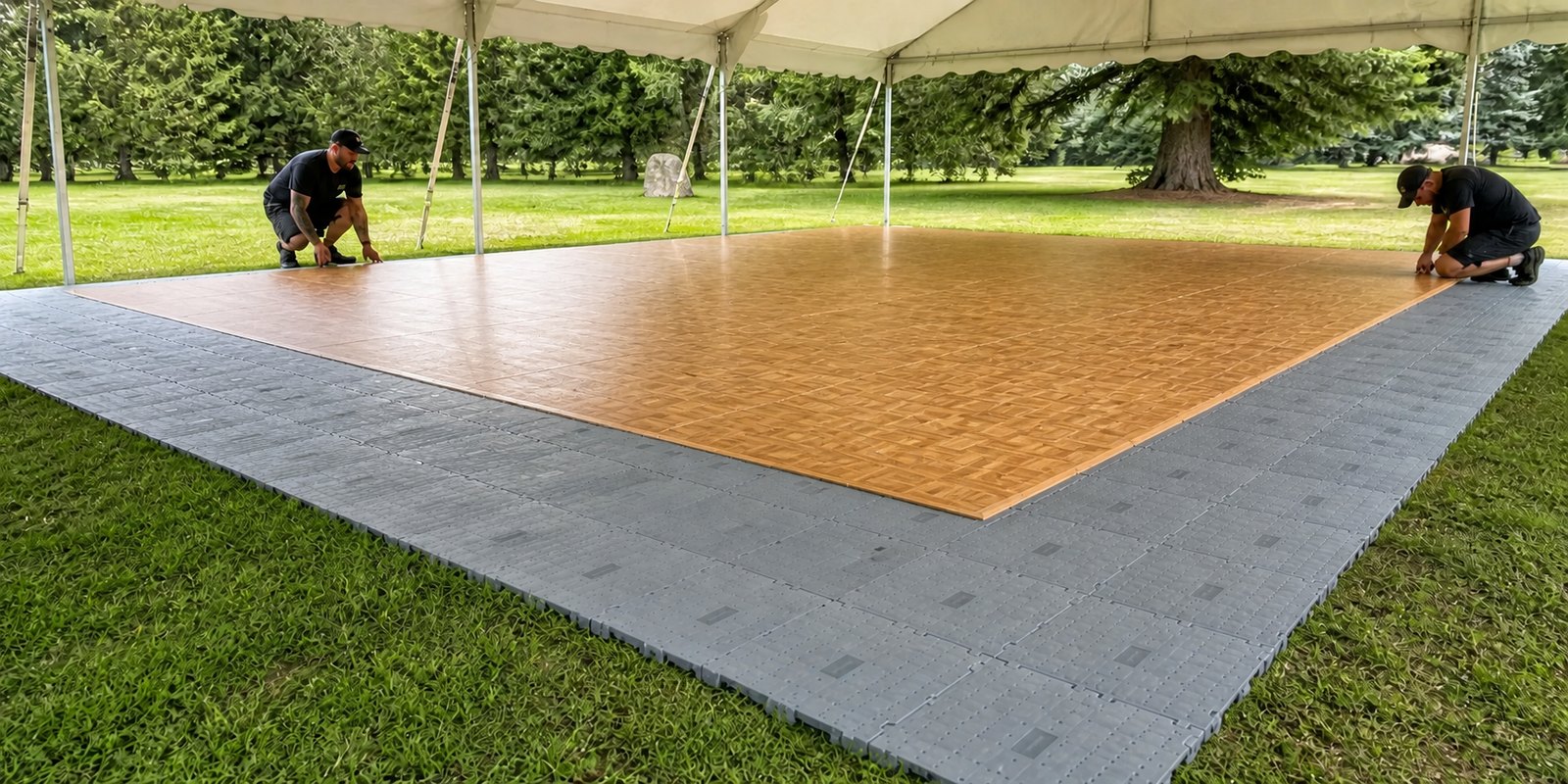
A finished dance floor and a temporary event subfloor do different jobs. The finished floor is the surface guests see and dance on. The subfloor is the layer installed underneath when the dance area is located on grass.
GPLANN does not recommend placing a finished dance floor directly on grass. It is not a safe setup. A temporary subfloor should be installed first, then the finished dance floor can be placed above it.
The same site limitation still applies. The subfloor does not level the ground, so the selected dance-floor location must still be appropriate for the setup.
Ground and weather still matter
GPLANN does not have a formal ground-condition requirement specifically for this flooring, but the condition of the site still matters. The client is responsible for knowing and monitoring the weather and resulting site conditions.
If GPLANN determines that installation would be unsafe or would require substantially more setup time because of the conditions, GPLANN may refuse the installation at the client’s expense. The final quote and rental terms govern the specific booking.
There is no separate flooring-specific cancellation or rescheduling rule. It is better to discuss a questionable site before delivery than to assume the subfloor will solve every ground or weather problem.
Sizing follows the panel layout
Each panel measures 12 × 24 inches, or 1 × 2 feet, and covers 2 square feet. Because the system is modular, the final footprint must follow those panel dimensions. Not every requested width, length or custom shape will be available exactly as measured.
There is no minimum subfloor rental area. Optional bevelled edge pieces are available when requested, but they are not required as a standard part of every installation.
For planning purposes, a 10 × 10-foot area covers 100 square feet and uses 50 panels. At the one-day rate of $1.25 per 2-square-foot panel, the panel rental would be $62.50. The final quote depends on the confirmed layout and the other details of the order.
Pickup and delivered rentals
Customers may pick up the temporary flooring from GPLANN. When GPLANN delivers the flooring, setup and takedown are included at no additional charge.
When requesting a quote, provide the event location, the dimensions of each area, a description of the ground, and whether you prefer pickup or delivery. For a dance-floor installation, include the planned finished dance-floor size as well.
You can browse GPLANN’s event flooring and dance floor rentals to see the category, then contact GPLANN with the details of your event.
Frequently asked questions
Does temporary flooring level uneven grass?
No. It creates a temporary surface over the site, but it does not level slopes, dips or irregular ground.
Is subflooring required under every outdoor tent?
No. It is an optional rental. GPLANN recommends it when movement, sinking furniture, mud or the planned use of the tent makes grass alone less practical.
Can a finished dance floor go directly on grass?
No. GPLANN does not consider a finished dance floor directly on grass to be a safe setup. A temporary event subfloor should be installed underneath.
Can I request an exact custom size?
You can request a coverage area, but the final dimensions must follow the 1 × 2-foot panel layout. Some exact footprints will need to be adjusted.
How much does the flooring cost for one day?
The one-day rental rate is $1.25 per 2-square-foot panel. There is no minimum order.
How long can the flooring stay on living grass?
GPLANN does not set a standard maximum number of days. This is not a promise that covered grass will remain unchanged, so the site owner should consider the condition of the lawn and the event duration.
What happens if the weather or site becomes unsafe?
The client is responsible for weather and site conditions. GPLANN may refuse installation at the client’s expense if the site is unsafe or the conditions would require substantially more setup time.
Plan the surface around how the event will work
Temporary flooring over grass is most valuable when it solves a specific event problem. That may be a food-vendor tent, a busy service route, a seating area on soft ground, or the support layer under a finished dance floor.
Measure the areas that need coverage, note how each one will be used, and share the site conditions early. GPLANN can then help determine a practical modular layout and prepare an accurate quote for pickup or delivery.
Request a quote for temporary event subflooring in Edmonton and the surrounding area.