
Quick Summary:
You’ve probably walked between them at a registration desk or passed a pair beside a reception entrance. When you’re arranging your own event, though, knowing their name is only the start. The style you choose affects how the entrance looks and how guests understand where to go.
In event rentals, a stanchion is an upright post used to guide queues or mark a boundary, usually connected to another post by a retractable belt or a rope. You may also hear it described as a queue post.
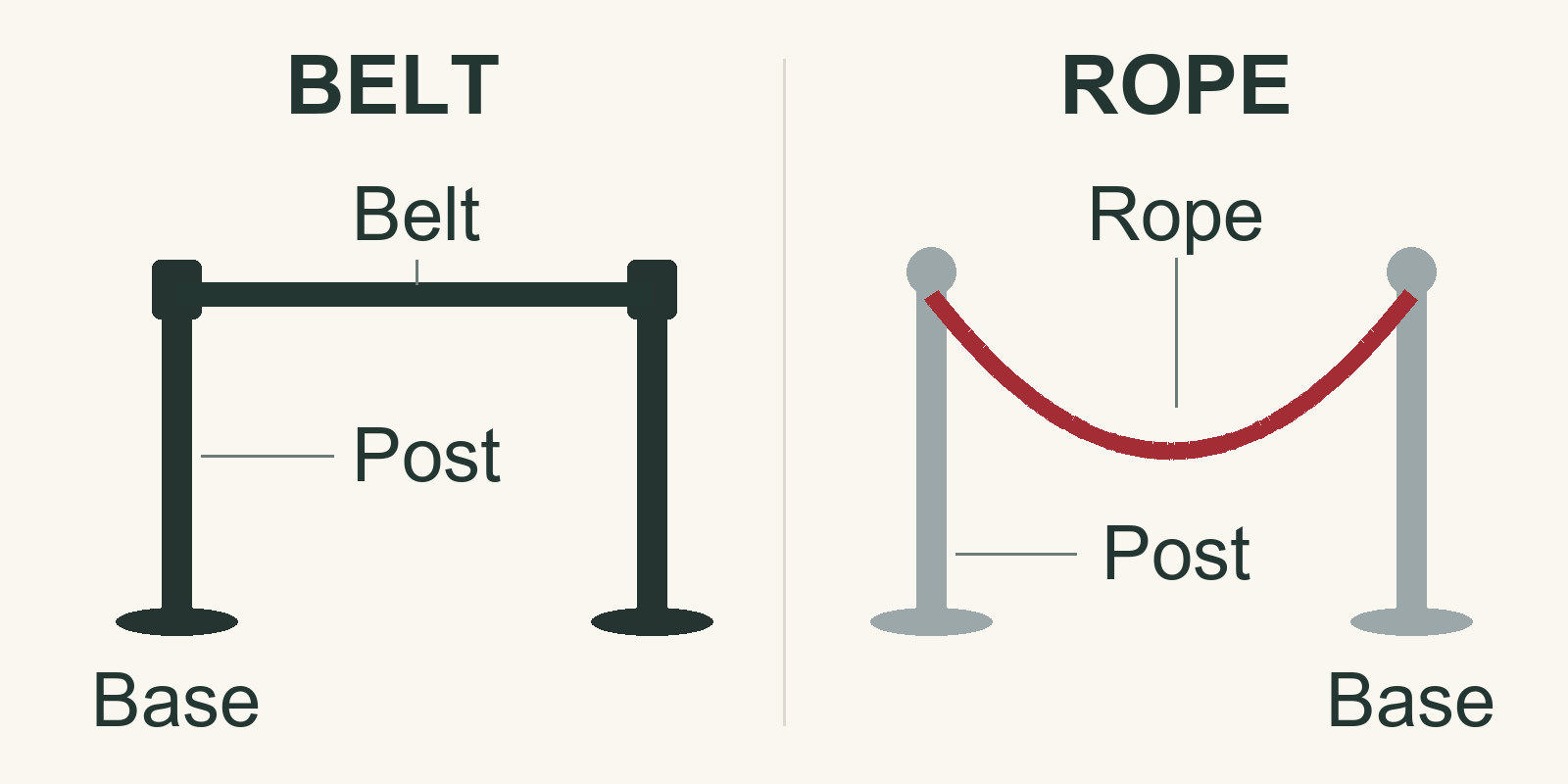
The post is the stanchion; the belt or rope is the connecting piece. A typical portable arrangement has a base, an upright post and a connection near the top. Some setups also use a sign holder to tell guests where to join the line or wait.
The word has other meanings in construction and other industries. Here, we’re talking about the freestanding posts you see at events, reception areas and ticket counters.
At conference registration, a short line of posts can make the waiting area easier to recognize. Position the entrance where arriving guests can see it, and consider where people will walk after collecting their name badges. Otherwise, the end of the line can send them back into the arriving crowd.
At a reception, traditional posts and rope can frame an entrance or a red-carpet approach. Around an exhibit, they can communicate where visitors should stop without placing a solid screen in front of the display.
These are guidance functions. Don’t assume ordinary belt or rope posts can resist crowd pressure, stop vehicles or protect someone from a fall. Those needs require equipment selected for that particular purpose. A visible boundary also doesn’t replace staff where access needs to be supervised.
Both styles can guide a queue. The useful distinction is how you want the arrangement to work and look.
A retractable belt pulls out from one post and connects to the next. This style is useful when a registration line needs to change shape or length as guests arrive.
GPLANN’s catalogue lists black and aluminum tape-top stanchions. Think about where the line starts, where it finishes and whether the arrangement may need to change during the event. Choosing a finish comes after those practical decisions.
Traditional posts use a separate rope between them. The hanging curve is part of their visual appeal, especially beside a reception entrance or along a red carpet.
GPLANN lists traditional chrome stanchions and an eight-foot red rope. When appearance is a priority, consider how the posts and rope will sit within the entrance, rather than trying to stretch each rope across the greatest possible distance.
| Your priority | Style to consider | What to confirm |
|---|---|---|
| A queue that may change during arrivals | Retractable belt | The layout and number of posts needed |
| A formal entrance or red-carpet appearance | Traditional rope | The posts and ropes included in your order |
| Clear directions at the start of either arrangement | A suitable sign holder | Compatibility with the selected post |
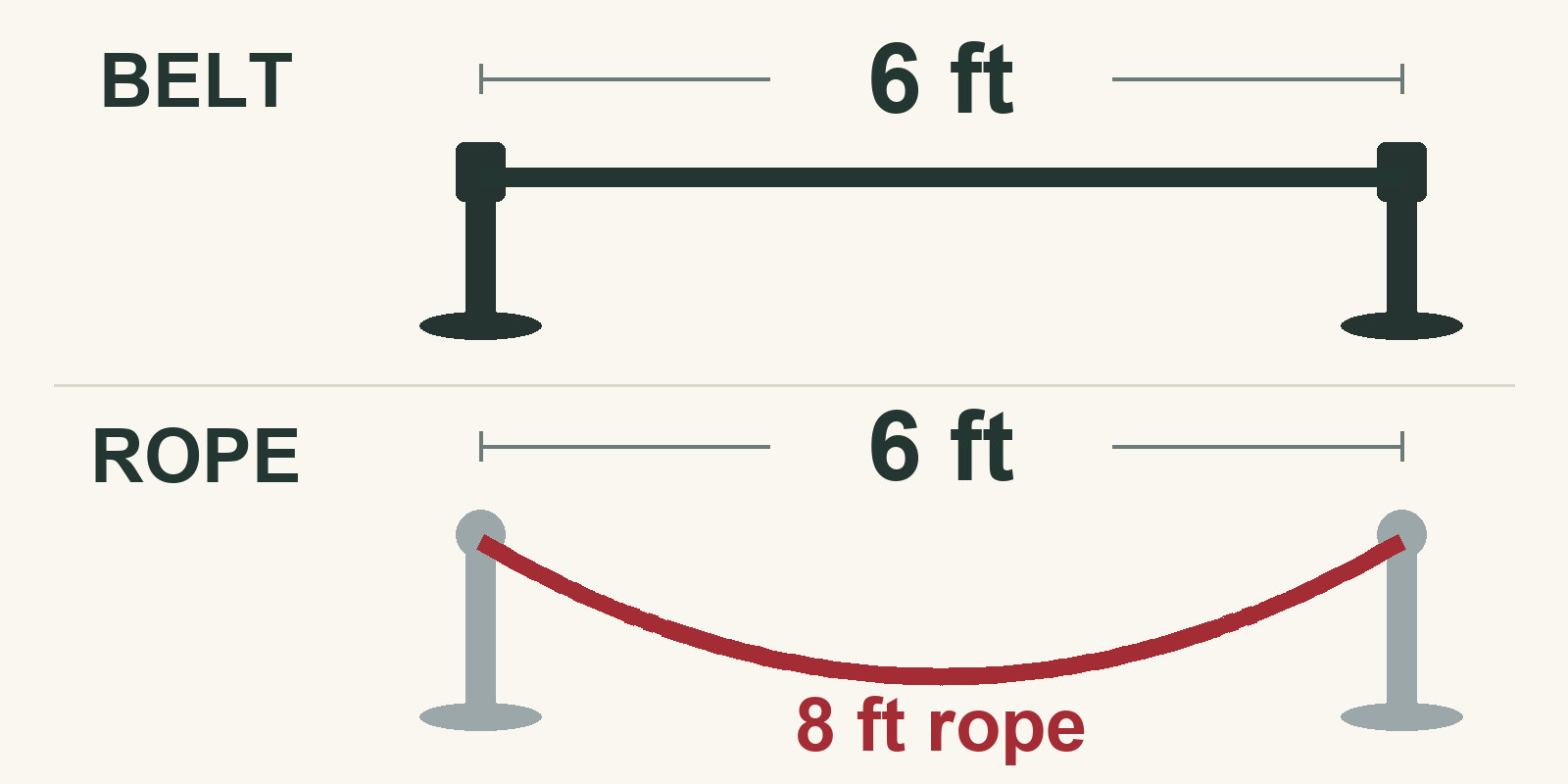
For GPLANN’s retractable-belt and traditional stanchions, place the posts six feet apart.
With traditional stanchions, the eight-foot rope is meant to hang between the posts. Stretching the posts eight feet apart takes away the draped appearance that gives the arrangement its red-carpet feel. Six-foot spacing leaves room for that curve.
This is the distance between connected posts along the boundary. It isn’t a recommended width for the walking route, and it doesn’t describe the maximum extension of every retractable belt. Other equipment may have different placement requirements.
When sketching the arrangement, count the posts as well as the connecting sections. A simple, separate run of three rope spans needs four posts because both ends need support. Corners, separate runs and openings can change the final quantity. Guest count alone won’t tell you how many posts to order.
Posts show guests the shape of the line. A sign explains what to do when they reach it. A short message such as “Registration” or “Please wait here” can help make the entrance clear before someone joins the wrong queue.
GPLANN lists sign-holder options for tape-top and traditional stanchions. Confirm the holder that fits your selected post and what your order includes, rather than assuming every attachment is interchangeable.
Review the space around the finished arrangement, including the bases and the people waiting inside it. The City of Edmonton’s accessible-event checklist emphasizes clear routes, accessible entrances and signs that don’t obstruct pathways. Use that as planning guidance and review your arrangement with the venue, including access to exits and event activities.
For an outdoor setup, confirm that the selected equipment suits the location and conditions. A metal finish alone doesn’t establish outdoor suitability.
Start with the job you need them to do: organize registration, frame an entrance or mark a display boundary. Then consider the appearance and whether the line will need to change during the event.
When enquiring about stanchion rentals, share the event date, venue, indoor or outdoor setting and a rough sketch of the area. Include any signs you need and confirm the posts, ropes and accessories in the proposed order. That gives you a clearer starting point than ordering by guest count or rope length alone.