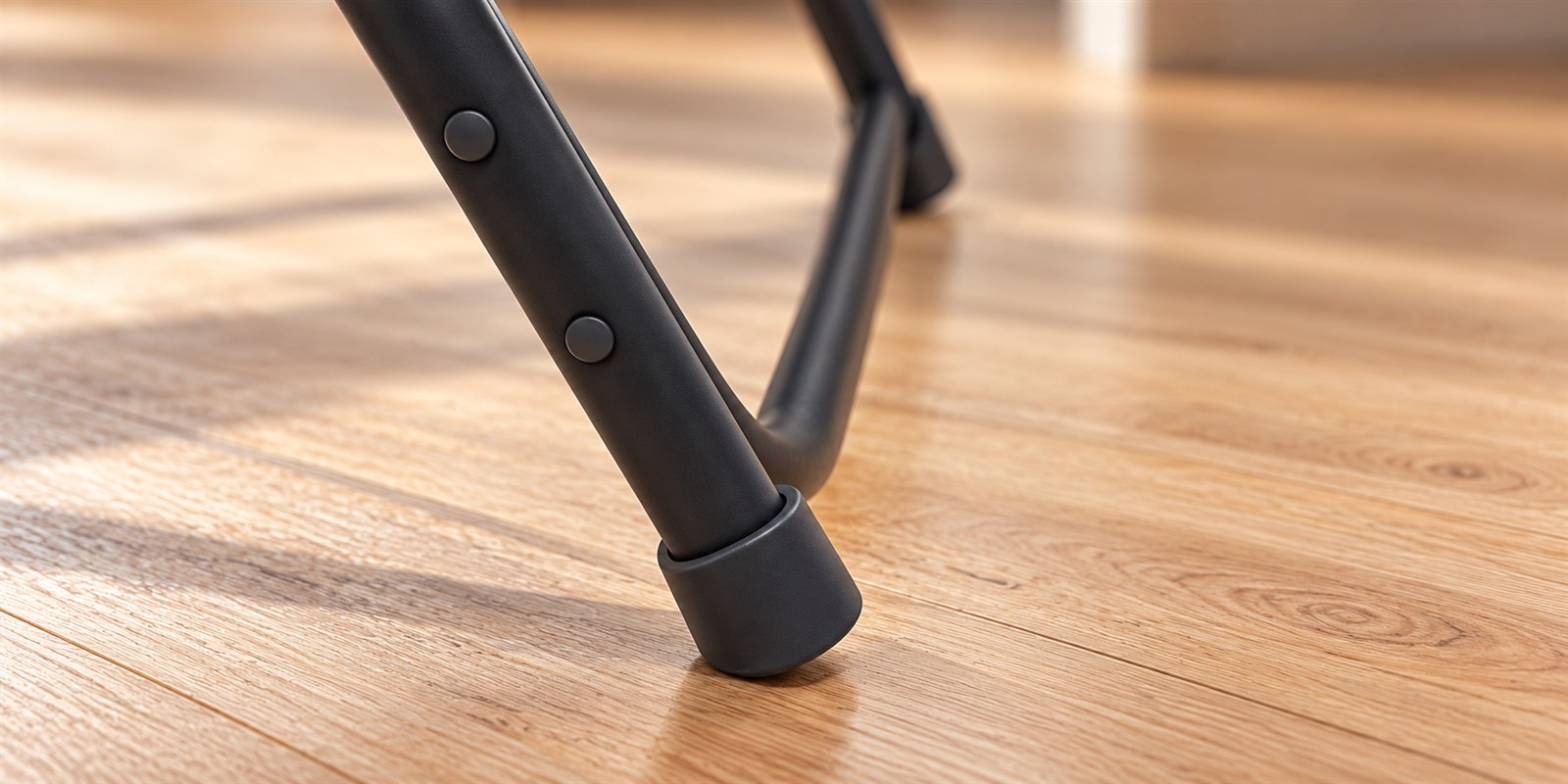
Quick Summary: Folding chairs can scratch floors, even with protective feet. Check that the feet are intact and clean, lift empty chairs when moving them, and follow the floor owner’s requirements before adding extra protectors. Non-marring feet help protect the surface, but they aren’t a scratch-free guarantee.
Extra seating is easy to picture around a table. What happens underneath it is easier to overlook, especially when you’re bringing chairs onto a finished floor at home or into a rented venue.
A chair might have a resin seat, a wooden frame or metal legs, but those descriptions don’t tell you much about its contact with the floor. Before choosing your indoor seating, take a closer look at the feet and the surface they’ll sit on.
Yes, folding chairs can scratch a floor. A missing or worn foot can leave a hard leg edge against the surface. Dirt beneath an otherwise intact foot can also become abrasive when the chair moves.
The National Wood Flooring Association explains that tracked-in debris can damage a wood floor’s finish when dragged across it. Its guidance recommends furniture protectors and lifting heavy furniture instead of sliding it. For folding chairs, lifting an empty chair to reposition it avoids dragging its contact points across the floor.
Imagine moving a few chairs from an outdoor gathering into the house. Their feet may still be attached, but that doesn’t tell you whether grit has collected underneath. Checking the contact surfaces matters as much as checking that the feet are there.
A mark isn’t necessarily a scratch, either. Surface scuffs, staining and damage to the finish call for different responses. Don’t assume that a mark will wipe away, or start scrubbing a venue’s floor without checking its care instructions.
At GPLANN, we use non-marring feet on folding chairs. These provide a protective contact surface between the leg and the floor. When choosing a folding-chair style, ask about the feet fitted to that model rather than assuming every style uses the same part.
“Non-marring” describes the feet’s intended protective function. It doesn’t mean they can be dragged across any floor without leaving a mark. Their condition, debris underneath and the floor’s own requirements still matter.
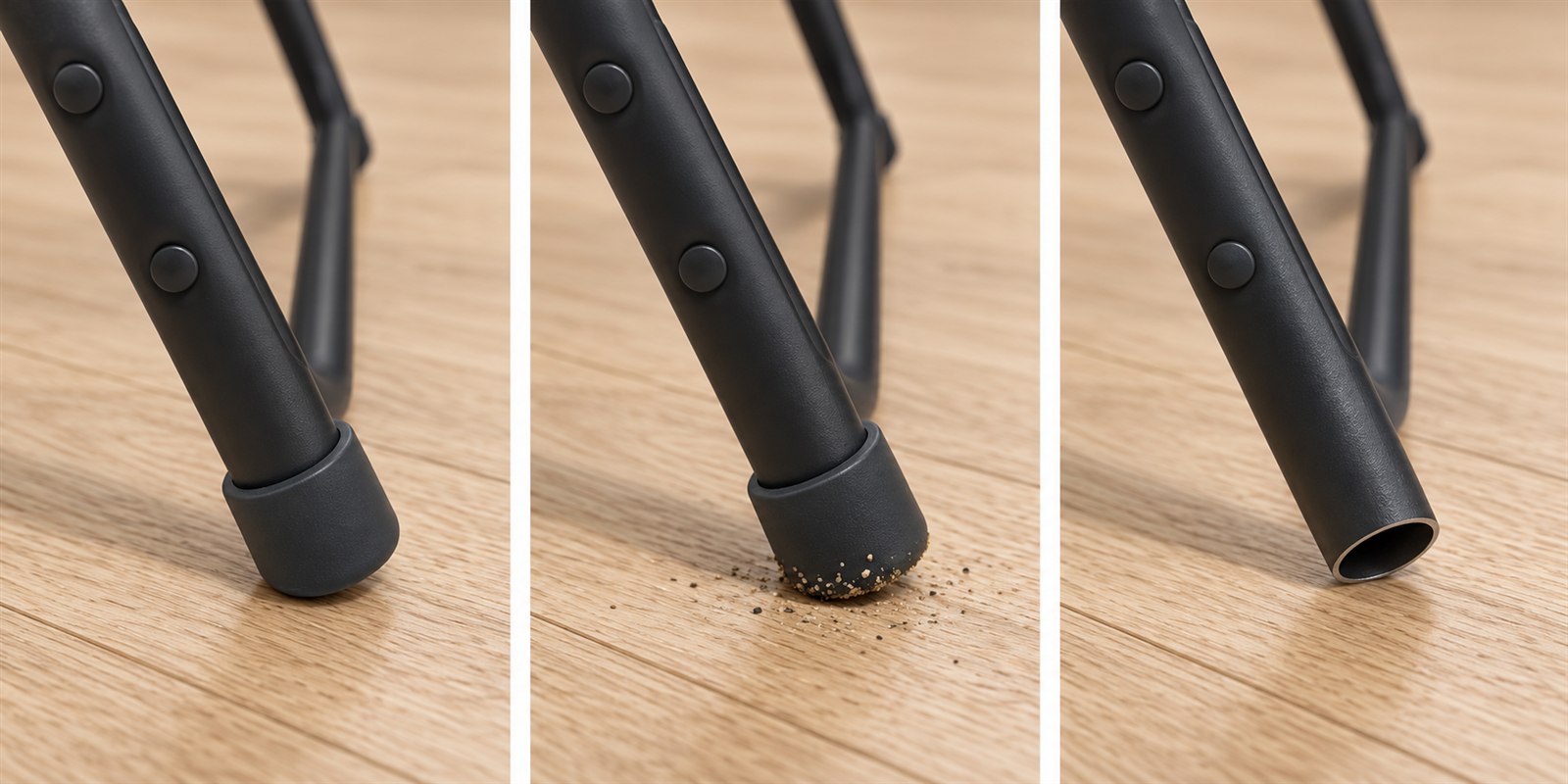
The three contact points above show the difference: a clean, intact foot; a foot with grit at its base; and a leg with its foot missing. Looking only at the chair from standing height can miss what’s happening underneath.
There isn’t one add-on protector that’s right for every surface. Start with the floor’s care instructions or the venue’s requirements, particularly before buying felt pads or rubber covers for rented chairs.
| Floor | What to check |
|---|---|
| Wood | Check the recommended furniture protection and keep contact surfaces free of debris. NWFA recommends floor protectors, including felt, as part of wood-floor care. |
| Vinyl or other resilient flooring | Check the specific floor’s requirements for non-staining protector materials and contact shape. A protector’s softness alone doesn’t establish compatibility. |
For example, Mannington’s resilient-floor care guidance calls for wide, flat, non-staining supports and identifies suitable hard plastic or non-staining felt options. Tarkett’s residential vinyl guidance warns that rubber contact can cause staining. These are examples of manufacturer instructions, not a compatibility verdict for every vinyl floor or chair foot.
That distinction matters when choosing additional protection: preventing a scratch and avoiding a stain are separate concerns. Confirm the actual floor and protector combination rather than relying on colour or a generic “floor-friendly” description.
Ask the venue whether outside chairs are allowed in the room and whether it has any floor-protection requirements. Share those requirements when arranging your rental, along with the chair style you’re considering.
Before placing chairs, check for missing, damaged or loose feet and debris at the contact points. If a foot is missing or damaged, set that chair aside and contact the rental provider. Don’t improvise a repair with tape or another part you happen to have.
If the venue asks for extra pads, confirm the attachment method with the rental provider before adding them. A pad needs to suit both the floor and the chair; permission to use chairs doesn’t automatically establish which modifications are appropriate.
Once the seating is in place, lift empty chairs when rearranging them. If you notice marks appearing, stop moving chairs over that area and speak with the floor owner before trying a cleaner or repair.
Planning indoor seating in Edmonton? Contact GPLANN with the folding-chair style you’re considering, the floor type and any venue requirements. Those details give us a useful starting point for discussing your rental.