Quick Summary:
Chafing dishes and warming trays are often grouped under the same label: food warmers. That makes the choice sound simpler than it is. The equipment affects how the buffet is arranged, what heat source the venue must permit, how the food holds during service and how closely the setup needs to be monitored.
Before choosing one, it helps to understand what each system is designed to do and which event conditions matter most.
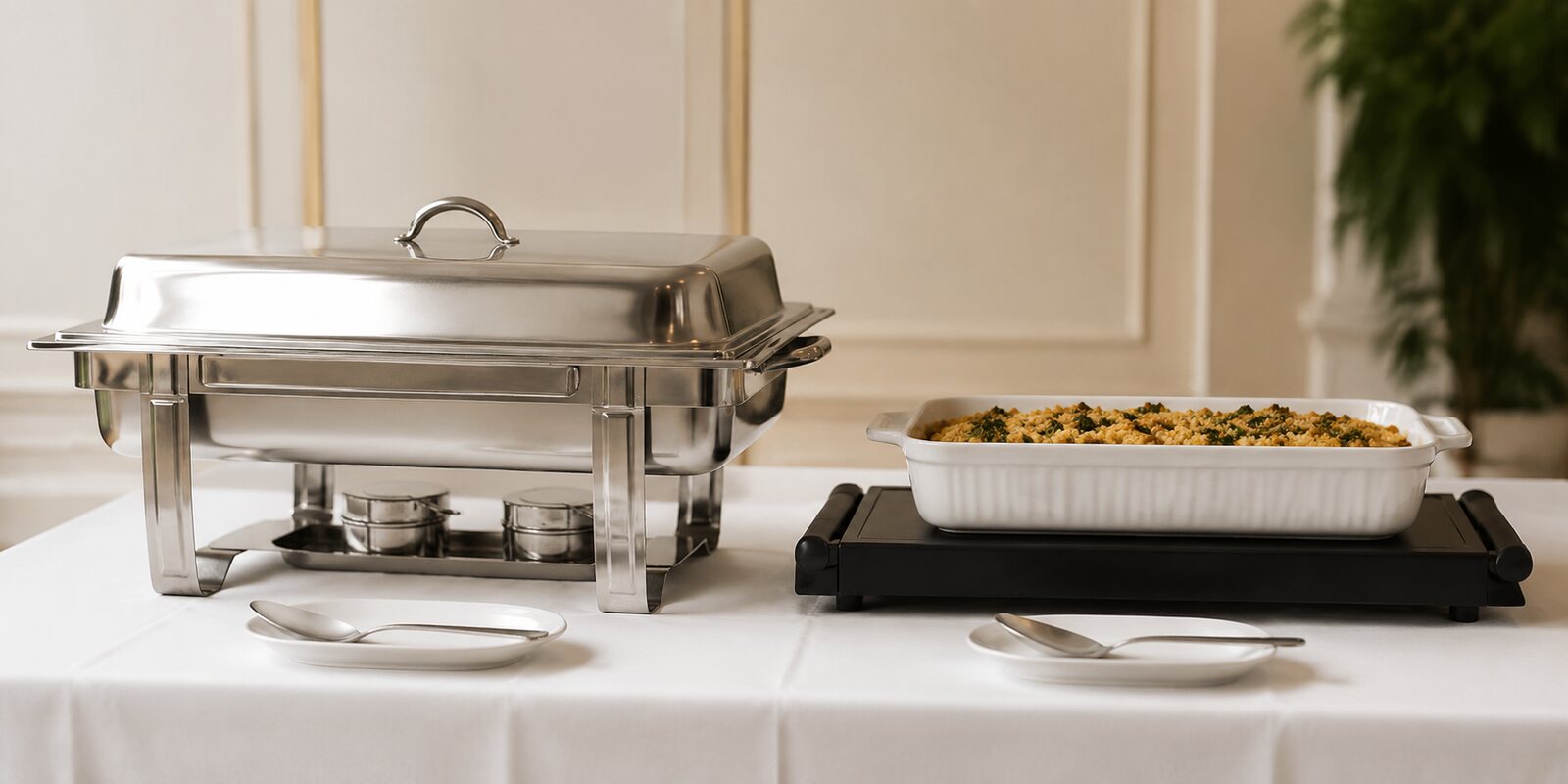
A chafing dish holds a food pan above heated water. Depending on the model, the heat may come from chafing fuel, an electric heater or an induction system. The heated water creates a gentler, more enclosed environment around the food pan.
An electric warming tray is a heated flat surface. Heat-safe casserole dishes, platters or the pans supplied with a buffet server sit directly on top of it. There is no water pan between the heat source and the serving dish.
That difference changes more than the look of the buffet. It affects the amount of food you can organize, the serving dishes you can use, the way moisture is retained and the venue requirements you need to confirm.
Chafing dishes are well suited to a traditional buffet where several hot foods need to be served in a consistent format. They make it easier to line up pans of rice, pasta, vegetables, sauced meats or similar dishes and replenish them as service continues.
A chafing dish will usually make more sense when:
The lid and humid heat can help many buffet foods hold more consistently. That same moisture is not ideal for everything. Fried foods, pastry and other crisp items can soften when steam is trapped around them. If texture is important, ask the caterer how the food should be held and whether smaller batches would work better.
Fuel-fired chafing dishes also remove the need to run a power cord to every unit. That can simplify some layouts, but only when chafing fuel is permitted and the equipment can be placed on a stable surface away from guest traffic. A flame going out, a water pan running low or a lid being left open can still affect holding performance. The setup needs an assigned person to watch it.
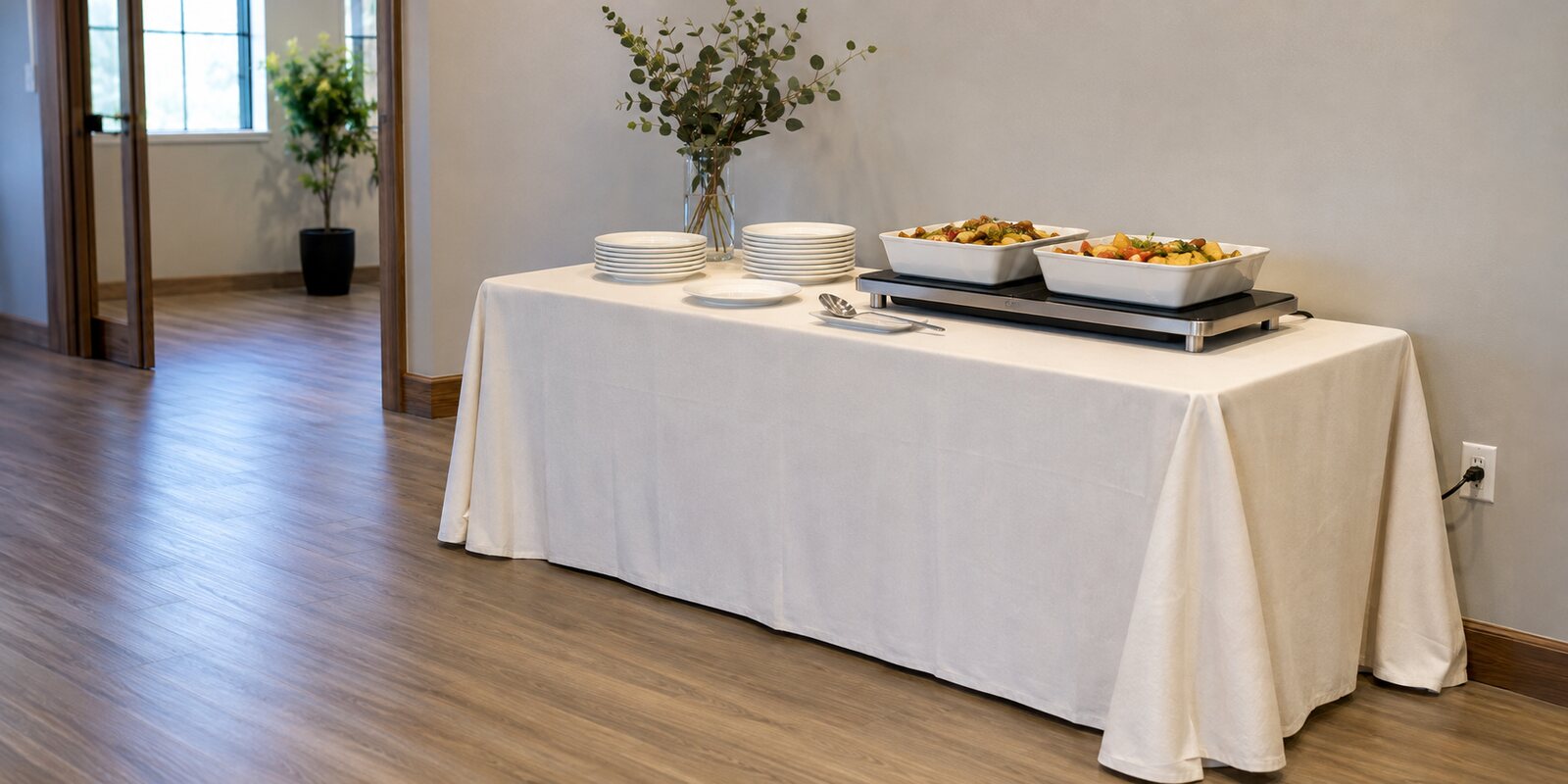
A warming tray can be the simpler option for a smaller indoor gathering where only a few dishes need gentle heat. Food can often remain in the heat-safe casserole dish or platter in which it will be served, which may feel more natural for a family dinner, meeting or small reception.
A warming tray may be the better fit when:
The last point matters. Warming trays vary widely in size, wattage, temperature control and approved use. One manufacturer’s instructions, for example, specify that its tray is for indoor domestic use and that food must already be cooked and hot. That restriction applies to that model, not every warming tray, but it shows why the exact manual matters.
Electricity also needs more planning than simply finding an outlet. Coffee urns, kettles, slow cookers and other appliances may already be using the same circuit. Cords must be kept away from water, heat and walking paths. An extension cord running through a buffet line is not a complete electrical plan.
If both options seem workable, start with the restrictions that are hardest to change.
Confirm:
Venue rules can be stricter than a general municipal requirement, so permission should come from the exact property where the event will take place.
If your buffet will be inside a GPLANN rental tent, check how food-warming equipment is handled under GPLANN tents. GPLANN permits chafing dishes using chafing fuel and electric food warmers under its tents when they are used correctly, kept stable and allowed by the venue. Cooking equipment that produces smoke or grease is treated differently.
Think beyond the number of dishes. Consider how each food changes while it sits.
Sauced foods, rice, pasta and many vegetables often work well in a covered chafer. Crisp foods may lose texture in that humid environment. A warming tray can keep a casserole dish or platter warm without transferring the food to a buffet pan, but the result depends on the tray, the serving dish and how evenly heat moves through it.
For a menu with several different textures, the best setup may use more than one holding method. Your caterer should make that decision based on the food, not only the appearance of the equipment.
Estimate how long the buffet will be open and who will supervise it. A short dinner service for a small group is different from a community event where guests arrive over several hours.
Someone should be responsible for:
If no one has been assigned to monitor the buffet, the equipment choice is not finished.
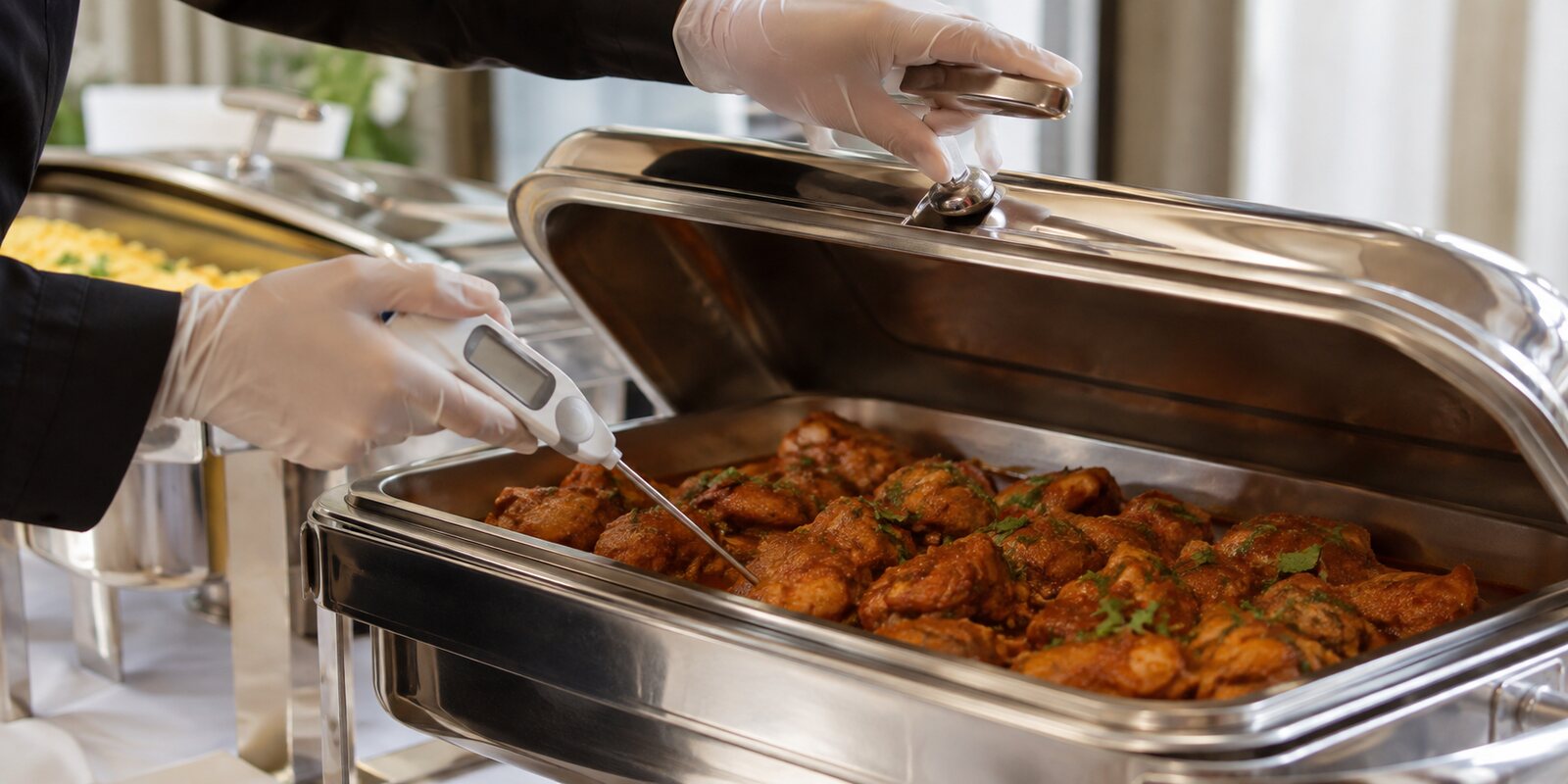
This is the most important distinction in the entire comparison. A chafing dish or warming tray is meant to maintain the temperature of food that is already properly cooked and hot.
Alberta Health Services says hot food should be held at a minimum of 60°C. Health Canada’s community-event guidance also identifies the range between 4°C and 60°C as the food-safety danger zone and recommends placing cooked food in chafing dishes, preheated steam tables or warming trays to keep it hot.
Cold or lukewarm food should be reheated with equipment designed for reheating. Health Canada recommends reheating leftovers to an internal temperature of 74°C. Its community-event food-safety guide specifically says that using chafing dishes or steam tables to reheat leftovers is not recommended.
Do not judge holding temperature by steam, touch or appearance. Use a food thermometer and continue checking during service. If the food cannot remain at a safe temperature, the answer is not to increase the service time and hope for the best.
A fuel-fired chafer is not useful when the venue prohibits chafing fuel. An electric tray is not useful when the buffet location lacks a suitable circuit. Confirm the non-negotiable restrictions first.
Both systems may warm food slowly, unevenly or inadequately when they are used outside their intended purpose. Properly cook or reheat the food first, then transfer it to preheated holding equipment according to its instructions.
A polished chafer may suit the look of a formal buffet, while a warming tray may disappear neatly beneath familiar serving dishes. Appearance matters, but it does not replace capacity, temperature control, venue permission or safe cord placement.
Steam can soften crisp food. Direct heat can dry the bottom or edges of some dishes. Plan smaller batches or a different holding method when food quality changes quickly.
Hot surfaces, water, fuel and electrical cords all need supervision. Decide who will monitor the buffet before guests arrive.
Choose a chafing dish when most of these statements are true:
Choose a warming tray when most of these statements are true:
If the answers are mixed, let the venue restriction, menu and service duration make the decision. Those factors are harder to work around than the appearance of the equipment.
If a chafing dish fits your event, browse GPLANN’s serving-equipment rentals for your buffet. Before requesting a quote, confirm the venue, menu, number of hot dishes and approximate service period so the equipment can be planned around the event you are actually serving.