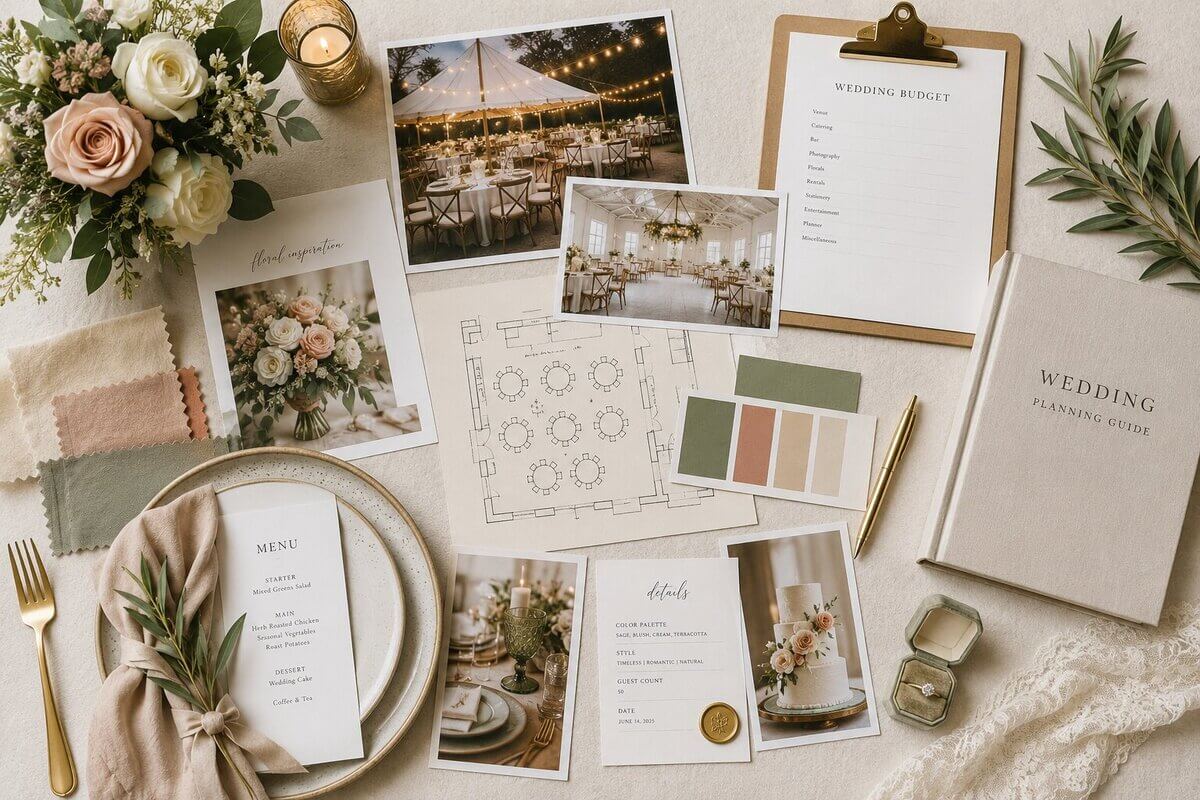
Quick Summary:
One of the first decisions many couples make is keeping the wedding small.
Fifty guests feels intimate. It’s enough to celebrate with the people who matter most without the scale, complexity, and expense that often come with larger weddings.
What catches many couples off guard is that some wedding costs shrink with the guest count and others don’t.
The result is that two weddings with the exact same number of guests can have dramatically different budgets.
Understanding where wedding costs come from makes it much easier to set realistic expectations, compare quotes confidently, and decide where your budget will have the biggest impact.
Before booking vendors or setting a spending target, it helps to understand how a 50-person wedding budget is typically built in Edmonton.
Guest count is only one piece of the puzzle.
A couple may invite the same number of guests as another couple yet spend tens of thousands of dollars more or less.
The reason is simple. Wedding budgets are driven by decisions.
The venue you choose, the style of meal you serve, the amount of rentals required, the type of bar service offered, and whether you’re celebrating indoors or outdoors can all have a significant impact on the final cost.
Some expenses scale directly with guest count. Food, alcohol, place settings, tables, chairs, and linens are good examples, and the per-item rental prices are the easiest of those to pin down early.
Other expenses stay relatively fixed. Your photographer doesn’t usually charge less because you invited fewer guests. Your officiant still performs the same ceremony. Hair and makeup, wedding planning, and many venue fees often remain similar regardless of whether you have 50 guests or 150.
That’s why a smaller wedding doesn’t automatically mean a small budget.
Once you understand which costs increase with every guest and which ones don’t, the pricing starts to make much more sense.
Most 50-person weddings in Edmonton tend to fall into one of three broad budget ranges.
Approximately $11,000 to $13,000
This type of wedding focuses on simplicity and value.
Couples in this range often choose:
A smaller budget doesn’t mean sacrificing the experience. It usually means being intentional about where the money goes, and sometimes about spreading the cost over instalments rather than reducing it.
Approximately $20,000 to $25,000
This is where many Edmonton weddings land.
A mid-range wedding often includes:
The overall experience feels polished and professionally executed without entering luxury pricing.
Approximately $35,000 to $45,000+
At this level, weddings become much more customized.
Couples often invest in:
The final budget can increase quickly depending on the level of personalization and guest experience being created.
One of the biggest misconceptions is that flowers and décor are the largest wedding expenses.
In reality, the biggest categories are usually venue, catering, alcohol, photography, and rentals.
Understanding these major categories helps explain why wedding budgets vary so widely.
The venue is often the foundation of the budget.
It’s also one of the most misunderstood costs.
A venue that appears expensive may actually include tables, chairs, setup, cleanup, coordination, and staff. Another venue may have a lower rental fee but require you to source everything separately.
When comparing venues, ask what’s included before comparing prices.
The venue with the higher rental fee may actually cost less overall.
Food is one of the largest expenses that changes directly with guest count.
For 50 guests, the difference between a simple buffet and a premium plated dinner can easily add several thousand dollars to the budget.
Many couples are surprised by how much catering affects the overall total because the pricing is usually presented as a per-person cost. Once multiplied across the entire guest list, even small differences become significant.
Bar service offers one of the greatest opportunities for flexibility.
Some couples choose a full open bar. Others offer beer and wine only. Some provide drink tickets or a limited hosted bar during cocktail hour.
There is no right answer.
The important thing is deciding what experience you want to create and building the budget around that decision.
Photography is one of the few categories that remains relatively fixed regardless of guest count.
Whether you invite 50 guests or 150, your photographer still spends the day capturing the wedding, editing images, and delivering the final gallery.
It’s often one of the largest investments in the budget, but it’s also one of the few things that lasts long after the wedding day is over.
Florals can fit almost any budget.
We’ve seen beautiful weddings built around a simple bouquet, a few centerpieces, and carefully selected accent pieces.
We’ve also seen floral installations become one of the largest expenses of the entire wedding.
The most effective décor budgets usually focus on creating impact in a few key areas rather than trying to decorate every space.
One of the biggest factors that affects wedding costs is the decision to celebrate indoors or outdoors.
Many couples assume outdoor weddings are less expensive.
Sometimes they are.
Often they aren’t.
A beautiful outdoor location can look very affordable at first glance. The challenge is that many of the things an indoor venue already provides need to be brought in separately.
That may include:
By the time everything is added together, an outdoor wedding can sometimes cost more than a comparable indoor celebration.
That’s especially true when the outdoor site doesn’t already have infrastructure in place.
One of the biggest mistakes couples make when budgeting for an outdoor wedding is focusing only on the tent, rather than the size that actually fits everything going under it.
The tent is important, but it’s rarely the only expense.
A comfortable outdoor reception may also require lighting, flooring, dance floors, power access, sidewalls, heating, cooling, and additional labour for setup and teardown, most of which sit on the lighting, flooring and power side of a rental list.
This is why two outdoor weddings on similar properties can have very different budgets.
If you’re considering a tented wedding, think about the complete guest experience rather than the tent itself, which is easier to picture once you lay the whole reception out to scale.
Wondering what size tent is appropriate for 50 guests?
Read our guide: What Size Tent for 50 Guests Wedding: A Realistic Guide for Comfortable Wedding Tent Planning.
It breaks down tent sizing, layouts, guest comfort, and the space required for dining, dancing, and other reception activities.
Most wedding budgets don’t go over because of one large unexpected expense.
They usually go over because of several smaller costs that weren’t considered early in the planning process.
Many venues and caterers charge service fees in addition to the advertised price.
Those fees can add up quickly, especially when food and beverage spending is involved.
Always ask for a complete estimate that includes all applicable fees and taxes.
Rental pricing often covers the equipment itself.
Delivery, setup, teardown, and pickup may be separate charges.
Understanding those costs early helps avoid surprises later.
Outdoor weddings require backup plans.
That may mean heaters for a cool evening, fans during hot weather, sidewalls for wind, or even an alternate indoor location.
These costs aren’t always included in the initial quote but can become essential as the wedding approaches.
It happens all the time.
A few extra guests.
Additional chairs.
More linens.
Extra décor.
A larger dance floor.
Small additions throughout the planning process can quietly add hundreds or even thousands of dollars to the final budget.
The couples who stay within budget aren’t usually the ones who spend the least.
They’re often the ones who spend most intentionally.
Some of the most effective ways to save include:
Many guests won’t remember how many floral arrangements were in the room.
They will remember the atmosphere, the people, the food, and how the celebration made them feel.
A 50-person wedding can be one of the most rewarding wedding sizes to plan.
It gives couples the opportunity to celebrate with the people who matter most while maintaining flexibility in how the budget is allocated.
The key isn’t finding an average wedding cost and hoping your wedding fits inside it.
The key is understanding where wedding costs come from in the first place.
Once you understand the major budget drivers, comparing venues, reviewing quotes, and making decisions becomes much easier.
The more informed you are before booking vendors, the fewer surprises you’ll encounter along the way. And that’s often what makes the difference between a stressful planning process and one you can actually enjoy.
Walk through our full inventory of tents, tables, linens and decor before you book. Our Edmonton team is on hand to help you plan the details.
Checking who's in...